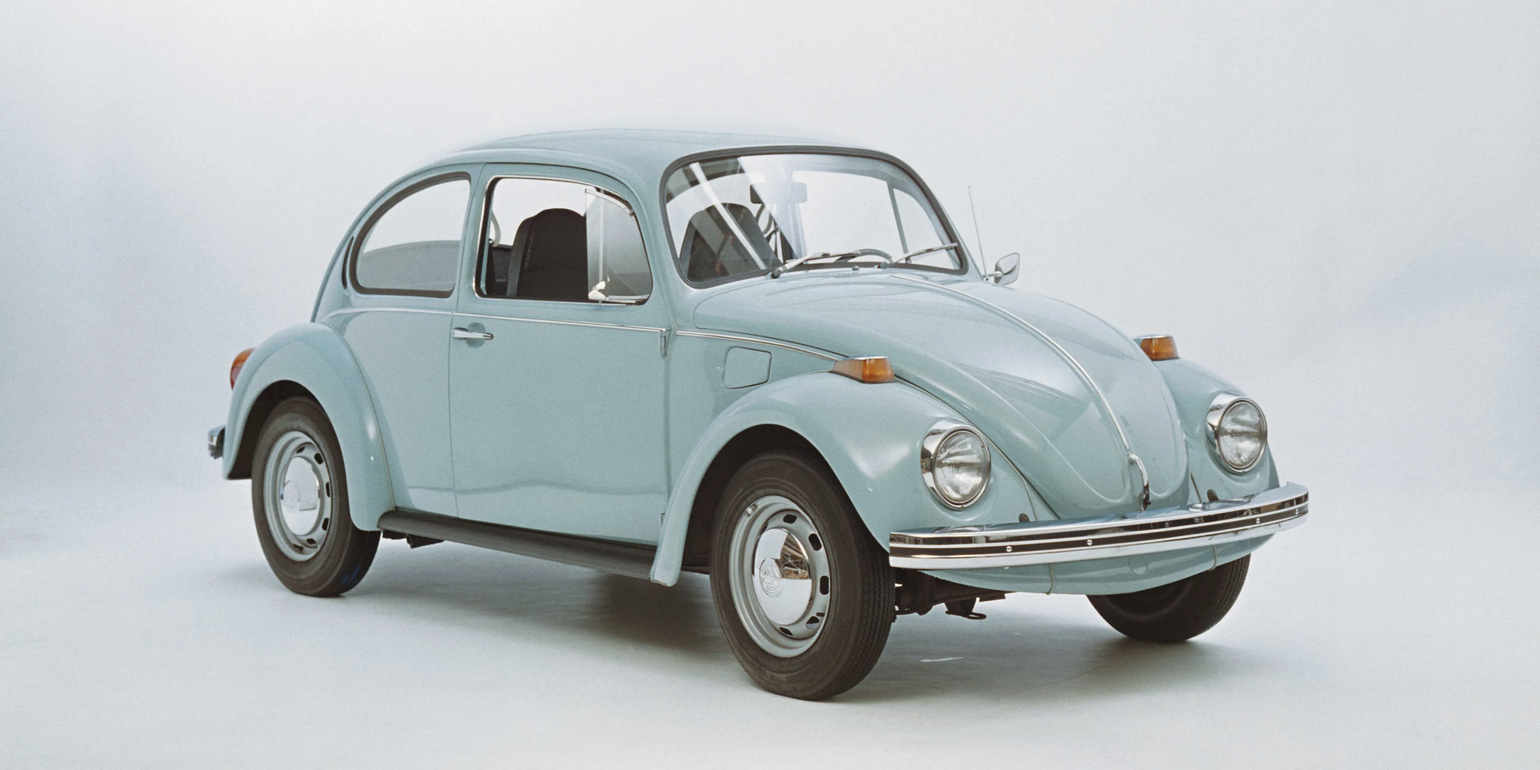
From Ferdinand Porsche's 1930s sketch of a simple, affordable car for everyone to the last Beetle rolling off a Mexican assembly line in 2003, the Volkswagen air-cooled story spans seven decades and the production of more than 21 million vehicles. It is a story of political ambition, wartime survival, postwar reinvention, and an enduring mechanical philosophy — the air-cooled, rear-mounted flat-four engine — that turned a humble economy car into one of the most beloved automobiles ever made.
Origins: Ferdinand Porsche and the People's Car
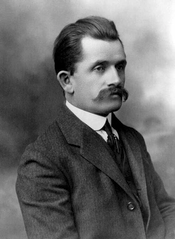 The idea of a cheap, reliable car for ordinary working people was not new in the early 1930s — Henry Ford had already proven the concept in America. But in Germany, where the average worker could not dream of owning a car, the notion captured the imagination of engineer Ferdinand Porsche. By 1931, Porsche had set up his own design consultancy in Stuttgart and was already sketching the outline of a rear-engined, air-cooled small car he called the Volksauto — the People's Car.
The key decisions Porsche made at this early stage would define every Volkswagen for the next four decades. An air-cooled engine eliminated the need for a radiator, coolant, and the complex plumbing that went with them — reducing cost, weight, and the number of parts that could fail. Mounting the engine in the rear gave the car excellent traction on loose or unpaved roads and freed up the entire front of the body for luggage storage. A rounded, aerodynamic body reduced drag and allowed a smaller, more economical engine to achieve adequate cruising speeds.
In 1933, Adolf Hitler came to power and seized on the popular-car idea as a propaganda tool. He instructed Porsche to design a vehicle that could be sold for no more than 990 Reichsmarks — roughly the price of a small motorcycle at the time — and be capable of carrying a family of four at motorway speeds. Hitler called it the Volkswagen: the car of the people.
The KdF-Wagen and Wartime Production (1938–1945)
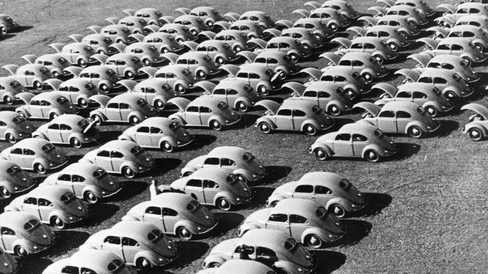 The production car — officially called the KdF-Wagen, after the Nazi leisure organisation Kraft durch Freude (Strength through Joy) — was unveiled at the 1938 Berlin Motor Show. To pay for it, German workers could buy savings stamps at 5 Reichsmarks a week through a government savings scheme. More than 336,000 people signed up and began saving.
A purpose-built factory and an entirely new town to house its workers were constructed on the banks of the Mittelland Canal in Lower Saxony. The foundation stone for the factory was laid on 26 May 1938. The city was initially named Stadt des KdF-Wagens; it would later be renamed Wolfsburg.
Not a single civilian ever received a KdF-Wagen. Before production could begin in earnest, World War II intervened. The factory was converted to military production, turning out the Kübelwagen — a rugged, lightweight military utility vehicle based on the KdF platform — and the amphibious Schwimmwagen. Approximately 50,000 Kübelwagen and 14,000 Schwimmwagen were built during the war. The workers' savings were never refunded; after the war, a West German court ruled the Nazi organisation that collected them no longer legally existed.
By 1945, Allied bombing raids had reduced roughly 60% of the Wolfsburg factory to rubble. The town itself was crowded with displaced persons and returning soldiers. Yet the factory's basic structure — and the tooling inside it — had survived.
Rebirth at Wolfsburg: The British Era (1945–1948)
When British forces captured Wolfsburg in April 1945, Major Ivan Hirst of the Royal Electrical and Mechanical Engineers was tasked with assessing the factory. Hirst made a decision that changed automotive history: rather than stripping the machinery as war reparations, he put the factory back to work building cars. The British Army needed vehicles; the Volkswagen could provide them.
Under Hirst's direction, 1,785 Volkswagens were built in 1945, and the number grew steadily. Hirst also standardised the car's production, brought in German engineers, and kept the workforce fed and housed through a desperately difficult winter. When the British government offered the factory to British manufacturers, none were interested — the car was widely dismissed as too noisy, too ugly, and too impractical for commercial success. Ford reportedly declined the gift, calling it "not worth a damn." History has seldom produced a more expensive mistake in business judgment.
In 1947, the British appointed German industrialist Heinz Nordhoff — formerly of Opel — to take over management of the factory. By January 1948, Nordhoff was in charge, and the Volkswagen story entered its most dramatic chapter.
The Nordhoff Years: Global Expansion (1948–1968)
Heinrich "Heinz" Nordhoff was a conservative, methodical engineer who believed in making one product extremely well rather than many products adequately. Under his twenty-year leadership, Volkswagen expanded from a bombed-out shell of a factory producing a few thousand cars a year to the fourth-largest automobile manufacturer in the world.
Nordhoff resisted pressure to restyle or fundamentally redesign the Volkswagen. Instead, he made continuous, incremental improvements — better brakes, a stronger engine, improved heating, a synchronized gearbox — while keeping the car's basic architecture unchanged. This philosophy kept production costs down, ensured parts remained interchangeable across model years, and gave owners confidence that a mechanic anywhere in the world could service their car.
Export was central to Nordhoff's strategy from the beginning. By 1950, Volkswagens were being sold in fifteen countries. By 1955, the one-millionth car had been built. By 1960, Volkswagen had assembly plants in Brazil, South Africa, Australia, and Mexico. The car had become a global phenomenon.
The Beetle Conquers America
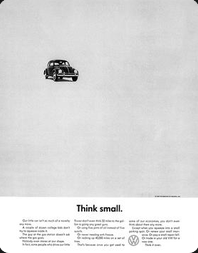 Volkswagen's success in the United States is one of the great marketing stories of the twentieth century. In a country where cars were expected to be large, powerful, and restyled every year, the little Volkswagen seemed to have nothing to offer. Early sales were negligible.
Then, in 1959, the New York advertising agency Doyle Dane Bernbach was hired to relaunch the VW in America. What followed was a campaign that advertising historians rank among the greatest ever produced. Where American car ads promised glamour and power, DDB ads were self-deprecating, honest, and funny. The headline "Think Small" ran over a tiny image of the Beetle on a vast white page. "Lemon" ran over a photograph of a perfect-looking car above copy explaining that Volkswagen's quality-control inspectors had rejected it for a blemish on the chrome strip of the glove compartment.
The campaign worked spectacularly. American sales surged through the 1960s. By 1968, Volkswagen was selling over 400,000 cars a year in the United States alone, and the Beetle had become an unlikely cultural symbol — the car of the counterculture, of college campuses, of the anti-establishment. Its affordability, reliability, and ease of home repair made it particularly popular with younger buyers who couldn't afford more expensive cars or the dealer visits that American cars often required.
The Air-Cooled Family Grows
The Beetle was never the only product to carry Volkswagen's air-cooled engine. Throughout the 1950s and 1960s, the company expanded its lineup while keeping the same fundamental mechanical layout.
The Type 2 Transporter (1950)
The story of the VW Bus begins, improbably, with a Dutch importer named Ben Pon. Visiting Wolfsburg in 1947, Pon sketched a boxy, van-like vehicle on a Beetle platform — a simple commercial vehicle that could carry goods in its flat-floored cargo area while the engine sat tucked beneath the floor at the rear. Volkswagen developed the idea, and the Type 2 Transporter entered production in 1950.
The Type 2 — known variously as the Bus, the Microbus, the Kombi, the Camper, and the Transporter depending on body style and market — became nearly as iconic as the Beetle. Its upright, boxy shape and front-mounted cab gave it a cheerful, friendly look that again made it a symbol of the 1960s counterculture. The Bay Window Bus (1967–1979) and Wedge (1979–1992) continued the lineage, though later versions used water-cooled engines.
The Karmann Ghia (1955)
For buyers who wanted Volkswagen reliability in a more stylish wrapper, the Karmann Ghia arrived in 1955. The body was designed by Italian coachbuilder Ghia and hand-assembled by German coachbuilder Karmann, fitted over a standard Beetle floorpan. The result was a graceful, low-slung coupé that looked far more expensive than it was — and was, under the skin, simply a Beetle.
The Karmann Ghia was never fast — it used the same modest Beetle engine — but it was beautiful and bulletproof. A convertible version followed in 1957. The Type 3 Karmann Ghia (based on the larger Type 3 platform) appeared in 1962 but sold in smaller numbers. The original Karmann Ghia remained in production until 1974.
The Type 3 (1961)
While the Beetle soldiered on, Volkswagen recognised by the late 1950s that it needed a larger, more refined car to compete with growing European rivals. The Type 3 — offered as a Notchback saloon, a Fastback, and a Squareback estate — used a modified version of the Beetle's air-cooled flat-four, flattened and repositioned to allow a boot at both front and rear.
The Type 3 was a competent, pleasant car but never achieved the Beetle's cultural traction. It sold respectably in Europe and, for a time, in North America, but tightening US emissions and safety regulations in the early 1970s made the Type 3 increasingly difficult to certify, and it was discontinued in 1973.
The Type 4 — 411 and 412 (1968)
The Type 4 was Volkswagen's most ambitious air-cooled product: a full-size family saloon and estate available with a larger, more powerful 1.7-litre (later 1.8-litre) air-cooled flat-four. It was quieter and more refined than anything Volkswagen had built before, and it featured fully independent suspension. But it was also heavier and less economical, and it arrived just as the oil crisis was reshaping buyer expectations. The Type 4 was discontinued in 1974 after modest sales.
The End of an Era in Germany (1974–1978)
By the early 1970s, Volkswagen was in serious trouble. The Beetle was ageing badly against newer, more modern competitors. The oil crisis of 1973 briefly revived interest in small, economical cars, but it also accelerated demands for cleaner, more efficient engines that the old air-cooled design struggled to meet. A succession of new water-cooled models — the Passat in 1973, the Golf (sold in America as the Rabbit) in 1974, the Polo in 1975, and the Scirocco — saved the company and pointed toward its future.
The final Beetle produced in Germany rolled off the Wolfsburg assembly line on 19 January 1978 — though Volkswagen was careful never to issue a formal farewell. The car had been in continuous production in Germany for nearly thirty years, during which some 16 million examples had been built at Wolfsburg alone. Production continued in other markets: in Mexico, in Nigeria, in Belgium, in Brazil.
Mexico Keeps the Flame Alive (1967–2003)
Volkswagen's Puebla plant in Mexico had been building Beetles since 1967, primarily for the domestic market. As German production wound down, Puebla became the last place on earth where new, genuine Beetles — mechanically unchanged from their Wolfsburg ancestors — continued to roll off the line.
The Mexican Beetle developed its own character and culture. For decades it was one of the most common cars on Mexican roads, served as the iconic taxi of Mexico City (painted green and white, often with no front passenger seat to ease passenger entry), and was cherished by generations of Mexican families for whom it represented the same reliable, affordable transportation it had provided in postwar Germany.
On 30 July 2003, the last air-cooled Beetle — chassis number 21,529,464 — was built at Puebla. Painted Aqua Blue, it was driven off the line to the sound of La Paloma played by a mariachi band. It was immediately donated to the Volkswagen factory museum in Wolfsburg, where it remains on display. The production run of the original Beetle — spanning 65 years, three continents, and over 21.5 million vehicles — had ended.
The Air-Cooled Legacy
More than two decades after the last original Beetle was built, the air-cooled Volkswagen endures with an intensity that few production cars have ever matched. Clubs, shows, swap meets, and online communities devoted to Beetles, Buses, Ghias, and their relatives draw tens of thousands of participants worldwide. The market for parts — both new-old-stock originals and quality reproductions — remains active and well-supplied. Skilled mechanics who specialise in air-cooled Volkswagens continue to practise a trade that has been passed down through several generations.
The reasons are not hard to identify. The air-cooled Volkswagens are among the most mechanically accessible cars ever mass-produced: simple in design, logical in layout, and generous in the clearances that allow home mechanics to work on them with basic tools. They are also durable beyond almost any reasonable expectation — properly maintained examples from the 1950s and 1960s are still used as daily drivers. And they carry a cultural weight accumulated over decades of association with freedom, economy, creativity, and the open road.
Porsche's air-cooled flat-four — dismissed as unbuildably cheap in the 1930s, written off as obsolete in the 1970s, and mourned as finally dead in 2003 — turned out to be one of the most consequential engine designs in automotive history. It powered the car that mobilised postwar Germany, colonised the American counterculture, kept millions of families moving on five continents, and still brings people together on weekends at fairgrounds and car parks around the world, six decades and more after the first ones left Wolfsburg.
Not bad for a people's car.