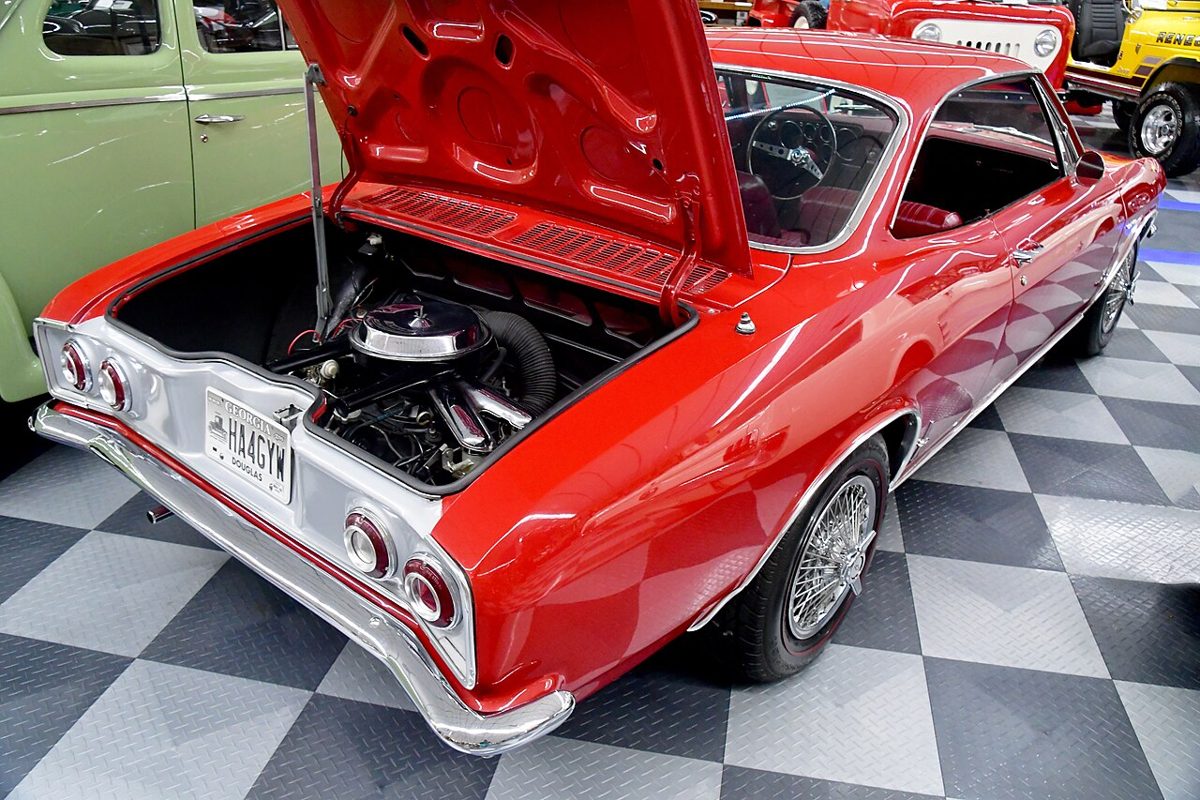
Welcome to the dedicated home of Chevrolet’s air-cooled history. In the vast panorama of American automotive history, few vehicles stand out as boldly as the Chevrolet Corvair. Produced between 1960 and 1969, the Corvair was not just a response to a changing market; it was a radical engineering statement that challenged every convention of the Detroit establishment. While the rest of the industry was focused on "longer, lower, wider" with heavy cast-iron V8s up front, Chevrolet embarked on a mission to create a sophisticated, lightweight, and efficient vehicle that looked toward European innovations while maintaining American style. At the heart of this revolution was a unique air-cooled flat-six engine, a powerplant that remains the only mass-produced American engine of its kind. To the air-cooled enthusiast, the Corvair represents a peak of American ingenuity—a moment when one of the world's largest manufacturers decided to take a genuine risk on a layout that prioritized balance, handling, and technical elegance over brute force.
The Visionary: Ed Cole and the Quest for a Sophisticated Compact
The story of the Corvair is inseparable from the career of Edward Nicholas Cole. A brilliant engineer who rose to become the General Manager of Chevrolet and eventually the President of General Motors, Ed Cole was a man who lived in the future. His experience with air-cooled technology wasn't merely theoretical; during World War II, he worked extensively on military tanks like the M41 Walker Bulldog, which utilized massive, air-cooled supercharged boxer engines. Cole saw the advantages of air cooling—reliability, reduced weight by eliminating the radiator and coolant, and faster warm-up times—and he believed these benefits could be successfully translated to a passenger car.
By the late 1950s, the American market was being disrupted by the "compact" car movement. Small European imports, most notably the Volkswagen Beetle, were gaining traction with consumers who valued economy and practicality. Cole realized that Chevrolet needed a compact car, but he didn't want to build a "scaled-down" version of a full-size Chevy. Instead, he pushed for a clean-sheet design: a rear-engine, unibody car with fully independent suspension. It was a project shrouded in secrecy, known internally as the "Z-Body," and it required Cole to use all of his political capital within GM to see it through to production. The result was a vehicle that was years ahead of its domestic rivals, offering a level of technical sophistication that was unprecedented for an entry-level American car.
The Turbo-Air 6: Engineering the Heart of the Corvair
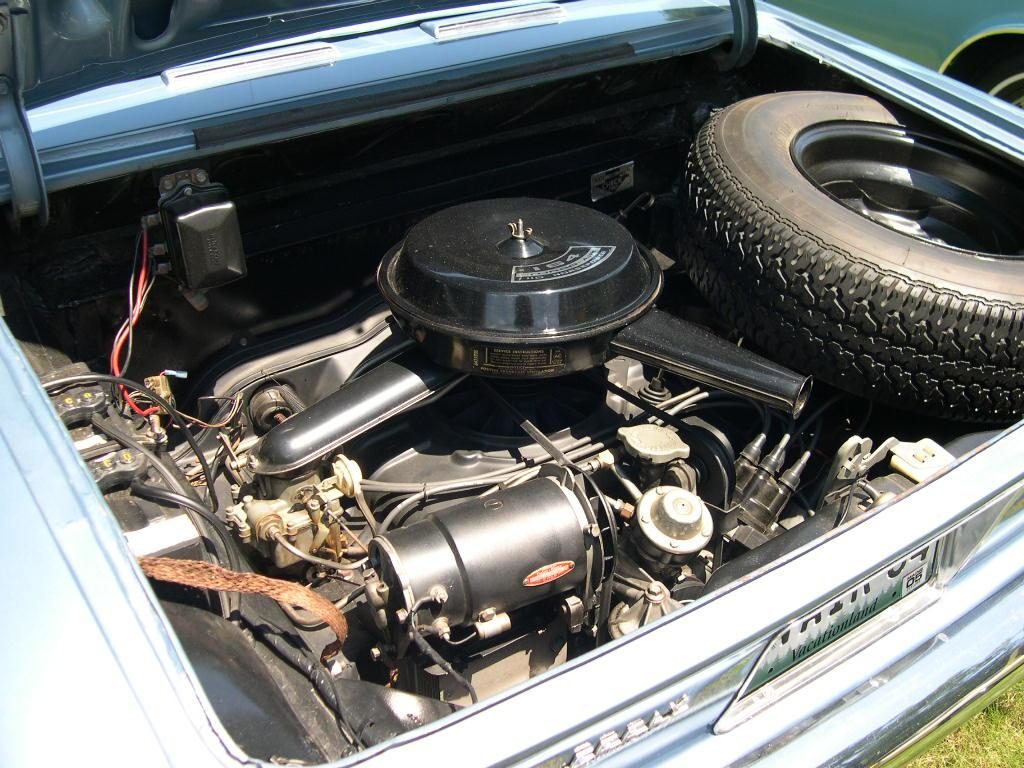
The "Turbo-Air 6" engine was the centerpiece of Cole's vision. Designing an air-cooled flat-six for mass production in the 1960s was a monumental task for Chevrolet's engineering team, led by Al Kolbe. They settled on a horizontally opposed configuration, which allowed for a low center of gravity and excellent packaging in the rear of the car. The engine utilized an aluminum crankcase and aluminum cylinder heads, paired with individual cast-iron cylinder barrels. This aluminum-intensive construction was cutting-edge for the era, significantly reducing the weight of the powerplant compared to the cast-iron inline-sixes common in other compacts.
Cooling a high-performance six-cylinder engine without liquid was achieved through a large, belt-driven fan mounted horizontally on top of the engine. This fan pushed air over the finned cylinders and heads, with thermostatically controlled dampers regulating the airflow to ensure the engine reached operating temperature quickly and stayed there. The initial displacement was 140 cubic inches (2.3 liters), producing a modest but smooth 80 horsepower. However, the design was inherently robust, and over the decade, it would grow to 164 cubic inches (2.7 liters) and see various states of tune, from the economical 95 hp units to the high-revving 140 hp four-carburetor variants and the legendary 180 hp turbocharged monsters. For the enthusiast, the "pancake" engine remains a marvel of mid-century engineering, providing a distinctive mechanical soundtrack and a tactile driving experience that no water-cooled car can replicate.
1960-1964: Establishing the Rear-Engine Revolution
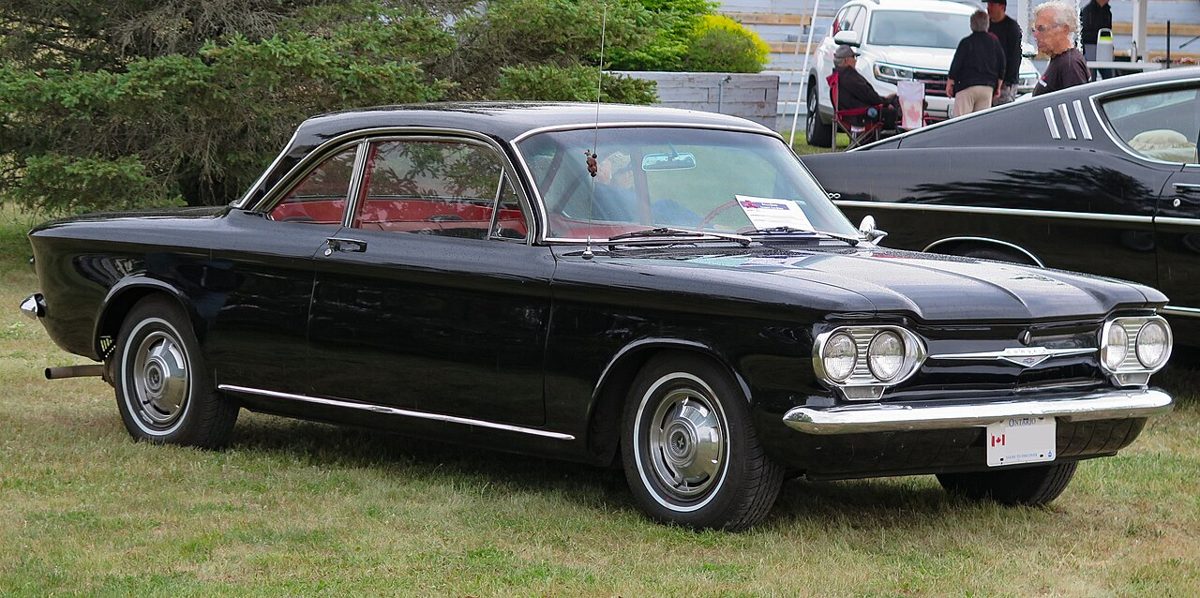
When the Corvair debuted in the autumn of 1959 as a 1960 model, it was an immediate sensation. Motor Trend magazine named it the 1960 "Car of the Year," praising its innovative design and crisp handling. The first-generation Corvair featured a clean, "no-grille" front end, a spacious cabin thanks to the flat floor, and a suspension system that allowed each wheel to respond independently to the road. Initially launched as a four-door sedan, the lineup quickly expanded to include a sleek two-door coupe and, eventually, a convertible. It was the introduction of the Monza trim in mid-1960 that truly defined the Corvair’s personality. With bucket seats and sporty styling, the Monza proved that a compact car could be more than just a "penalty box" for the budget-conscious; it could be a stylish, fun-to-drive machine that appealed to the heart as much as the wallet.
The first generation also showcased the versatility of the Corvair platform. Because the entire drivetrain was self-contained in a rear transaxle unit, Chevrolet was able to create a wide variety of body styles with minimal changes to the chassis. This period saw the Corvair compete across multiple segments, from the base 500 series to the luxury-oriented 700 and the sporting 900 Monza. The early years were marked by steady refinement, with engineers constantly tweaking the suspension rates and tire specifications to optimize the unique weight distribution of the rear-engine layout. By 1964, the final year of the first generation, the Corvair had matured into a well-sorted, distinctive alternative to the increasingly conventional American compact market.
Utility and Innovation: The Corvair 95 Trucks and Vans
One of the most fascinating chapters of the Chevrolet air-cooled story is the "Corvair 95" series, a line of light-duty trucks and vans introduced for the 1961 model year. Named for their 95-inch wheelbase, these vehicles were direct competitors to the Volkswagen Type 2, utilizing the same rear-engine, forward-control philosophy. The lineup included the Greenbrier Sportswagon, which was essentially a pioneer of the modern minivan, and the "Corvan" panel van. These vehicles offered incredible interior volume for their footprint, as the absence of a front-mounted engine and a long driveshaft allowed for a low, flat floor throughout much of the cabin.
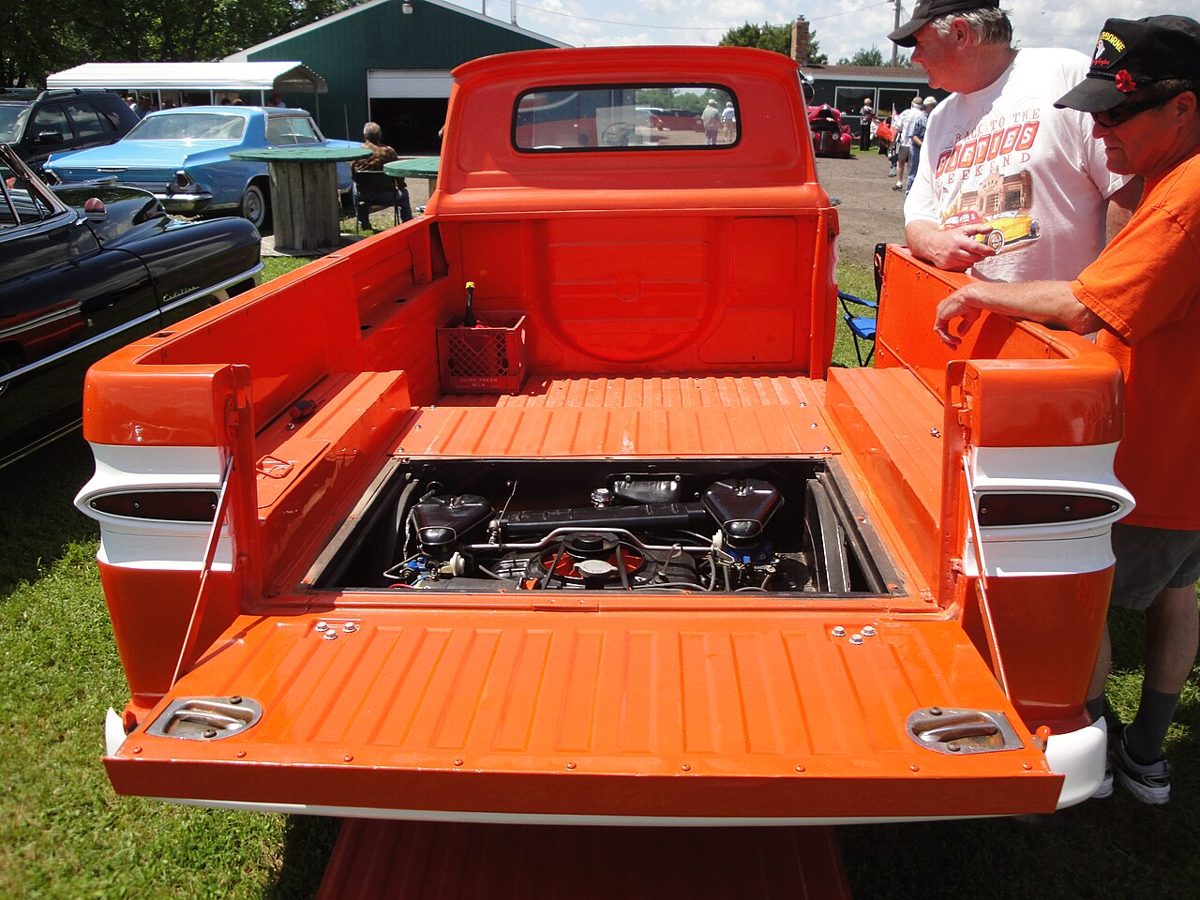
The pickup variants, however, were where the engineering team’s creativity truly shone. The "Loadside" featured a conventional tailgate, but it was the "Rampside" that became a cult favorite. Because the rear-mounted engine necessitated a raised bed floor at the back, Chevrolet added a side door on the passenger side that folded down to the ground, forming a sturdy ramp. This allowed users to simply roll heavy items, like garden tractors or appliance carts, directly into the deepest part of the bed. While the Corvair 95 series was eventually phased out in favor of the front-engined Chevy Van and the El Camino, these air-cooled workhorses remain highly prized by collectors today for their unique utility and undeniable charm.
Forced Induction: Pioneering the Turbocharged Performance Era
Long before turbocharging became a standard tool for efficiency in modern cars, Chevrolet used it to turn the Corvair into a genuine performance threat. In 1962, the Corvair Monza Spyder was introduced, featuring a turbocharged version of the 145-cubic-inch flat-six. This made the Corvair one of the first two production cars in the world to offer a factory turbocharger, alongside the Oldsmobile Jetfire. The Spyder’s engine was heavily modified to handle the boost, featuring a high-strength crankshaft, heavy-duty valves, and a unique side-draft Carter carburetor. The result was a jump from 102 hp in the standard Monza to a whopping 150 hp, giving the lightweight Corvair the power-to-weight ratio to challenge far more expensive sports cars.
The turbocharger was more than just a performance add-on; it was a testament to the potential of the air-cooled flat-six. The system was remarkably simple by modern standards, lacking a wastegate and instead relying on the restrictive nature of the intake and exhaust to limit boost. Yet, it provided a thrilling surge of power once the turbine spun up, accompanied by a distinctive whistle that announced the car’s arrival. When the second-generation Corsa replaced the Spyder in 1965, the turbocharger was further refined, and displacement grew to 164 cubic inches, pushing output to a peak of 180 hp. For many enthusiasts, the "Turbo Corvair" is the ultimate expression of the brand's air-cooled era, combining advanced technology with a raw, mechanical soul.
Handling the Heat: Suspension, Safety, and the Nader Controversy
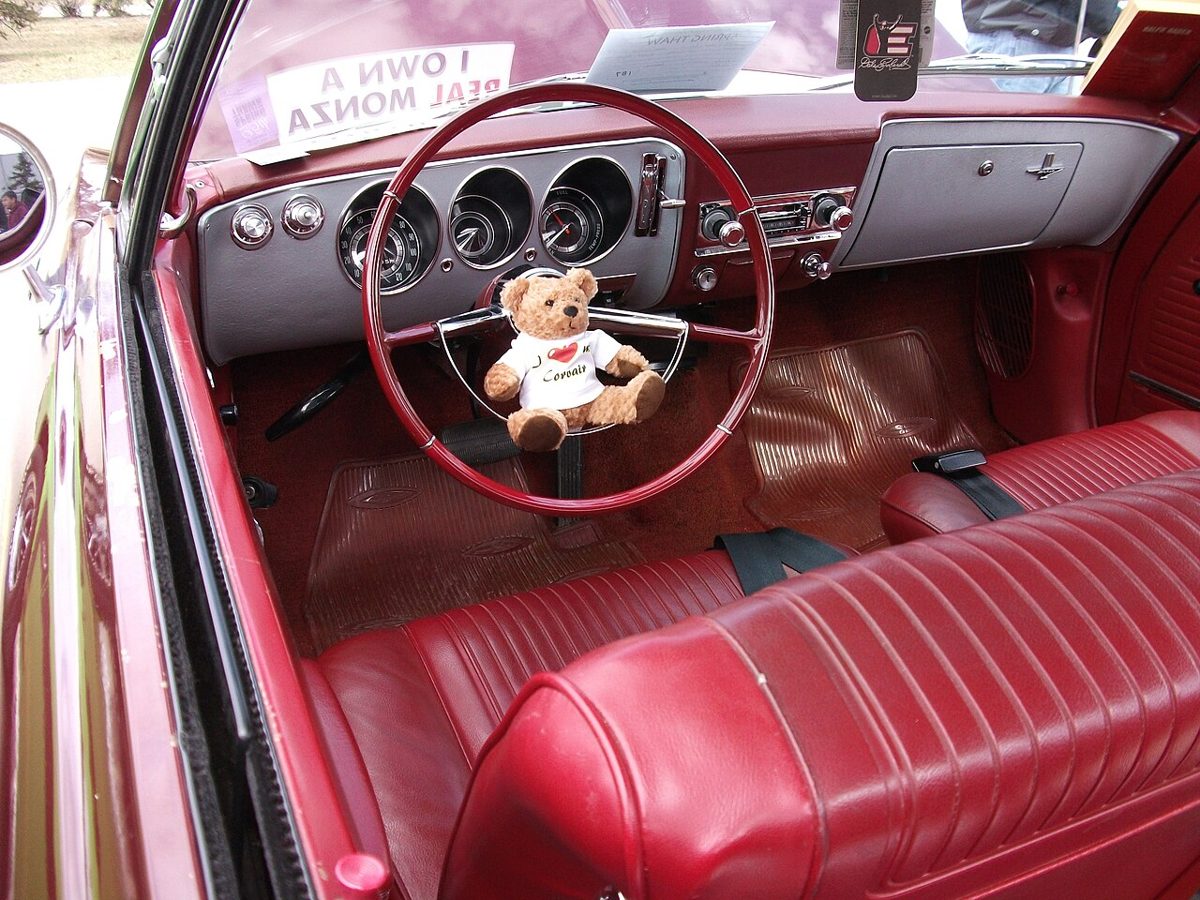
No history of the Corvair would be complete without addressing the controversy that defined its public image. The early Corvairs (1960–1963) utilized a swing-axle rear suspension, a design choice shared with contemporary Volkswagens and Porsches. While this system was excellent for packaging and providing a smooth ride, it could lead to "camber change" under extreme cornering, potentially causing the rear tires to lose grip or, in rare cases, the car to roll over. Chevrolet mitigated this by recommending specific tire pressure differentials (lower in the front, higher in the rear), but many owners and service stations ignored these instructions, leading to inconsistent handling characteristics.
In 1965, Ralph Nader published *Unsafe at Any Speed*, a book that criticized the American auto industry's safety record, with the first chapter specifically targeting the Corvair's handling. By the time the book was released, however, Chevrolet had already addressed the issue. For the 1964 model year, they added a transverse leaf spring to the swing-axle setup to limit travel, and the 1965 second-generation model featured a completely new, fully independent trailing-arm rear suspension identical in concept to the Corvette Sting Ray. Despite a 1972 government study that eventually cleared the Corvair, concluding it was no more dangerous than its contemporaries, the damage to the car's reputation was done. For the enthusiast, this history adds a layer of complexity to the Corvair story—it was a car that was technically exonerated but socially condemned, making it a symbol of the tension between engineering innovation and consumer advocacy.
Refined Excellence: The Second-Generation Masterpiece (1965–1969)
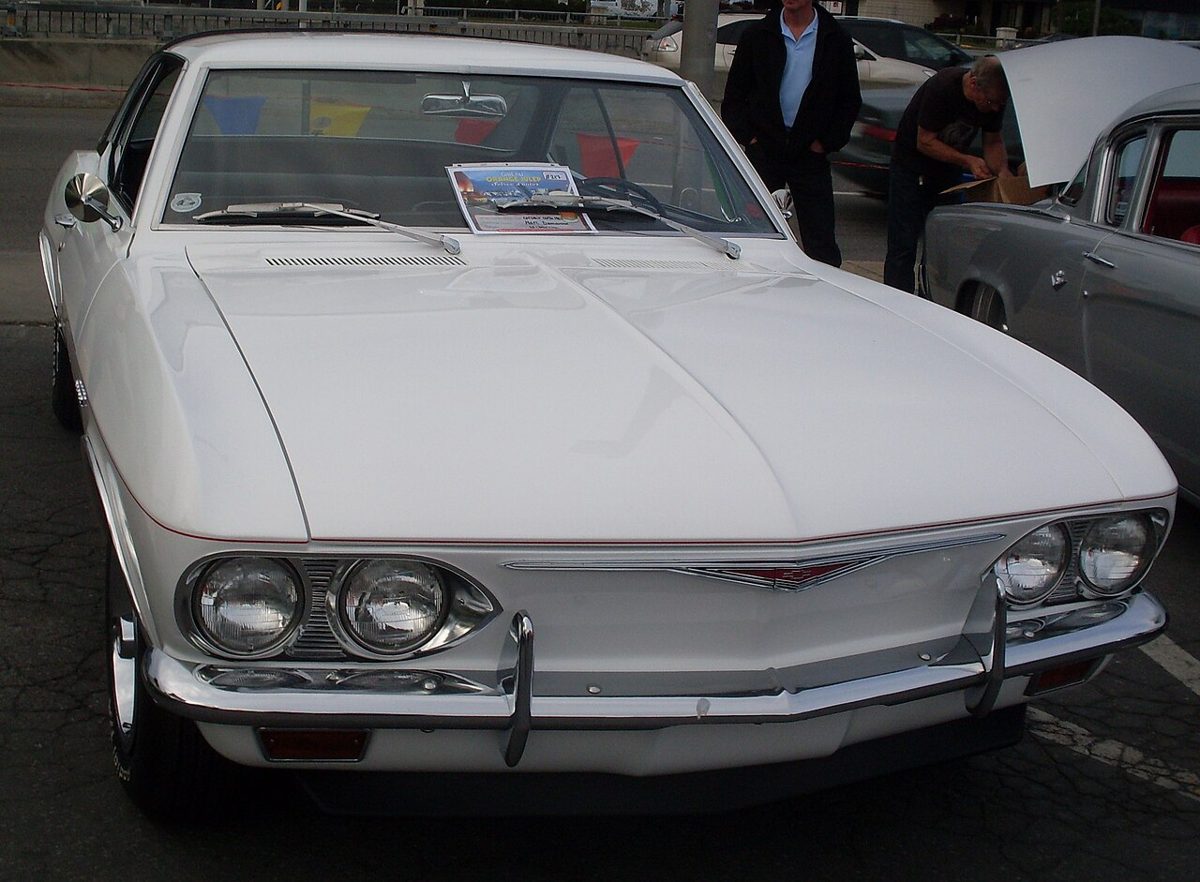
If the first-generation Corvair was a revolution, the second generation was a masterpiece. Launched for the 1965 model year, the new Corvair featured what many consider to be one of the most beautiful designs ever to come out of Detroit. Gone were the sharp creases and "bathtub" lines of the early cars, replaced by a sleek, "Coke-bottle" profile with flowing curves and a pillarless hardtop design that looked fast even when standing still. The new body was wider and longer, offering more interior space while maintaining the car's compact footprint. It was a design so influential that it reportedly served as an inspiration for the European designers at brands like BMW and Opel.
Underneath the stunning skin, the 1965 Corvair was a completely different beast. The new Corvette-inspired rear suspension transformed the handling, providing a planted, predictable feel that invited spirited driving. The braking system was upgraded, and the engine options were expanded, with the new "Corsa" model offering either a four-carburetor 140 hp engine or the 180 hp turbo. The interior was also redesigned with a more driver-centric cockpit, featuring full instrumentation and improved ergonomics. These cars represented the pinnacle of what Ed Cole had envisioned: a sophisticated, world-class sports sedan that could hold its own against the best that Europe had to offer. For many air-cooled addicts, the late-model Corvair Corsa is the "holy grail," representing the perfect marriage of American style and European-style engineering.
Racing Pedigree: Don Yenko and the Stinger’s Track Dominance
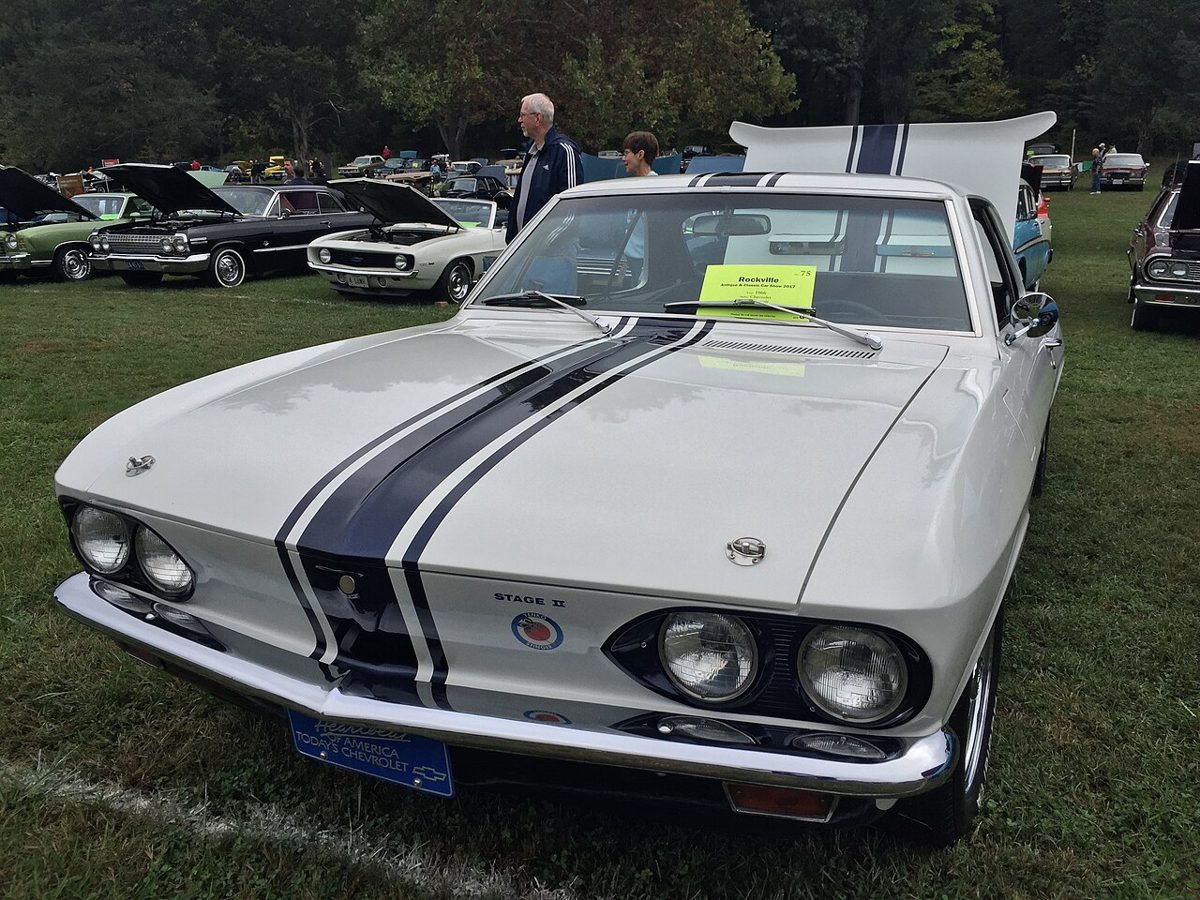
The Corvair’s performance potential was best realized on the race track, thanks largely to the efforts of Don Yenko. A successful racer and owner of Yenko Chevrolet in Pennsylvania, Don saw the second-generation Corvair Corsa as the perfect platform for a sports car that could compete in the SCCA (Sports Car Club of America) D Production class. To meet homologation rules, Yenko created the "Yenko Stinger," a factory-backed but dealer-prepared special. He ordered 100 Corsa coupes in 1966, all finished in Ermine White with blue stripes, and set to work modifying them for competition. Rear seats were removed to qualify as a two-seat sports car, and the engines were tuned in various "Stages" from 160 to 240 horsepower.
The Yenko Stinger was a giant-killer. With its lightweight construction, independent suspension, and rear-engine traction, it proved to be incredibly competitive against established rivals like the Triumph TR4. In 1967, driver Jerry Thompson piloted a Stinger to the SCCA D Production national championship, proving once and for all that the Corvair was a serious performance machine. Only 115 original Stingers were produced, making them among the rarest and most desirable Chevrolet performance cars in existence. The Stinger’s success remains a point of pride for the Corvair community, serving as definitive proof that the air-cooled flat-six platform was capable of world-class performance when properly tuned.
An Enduring Legacy: Why the Air-Cooled Corvair Still Matters
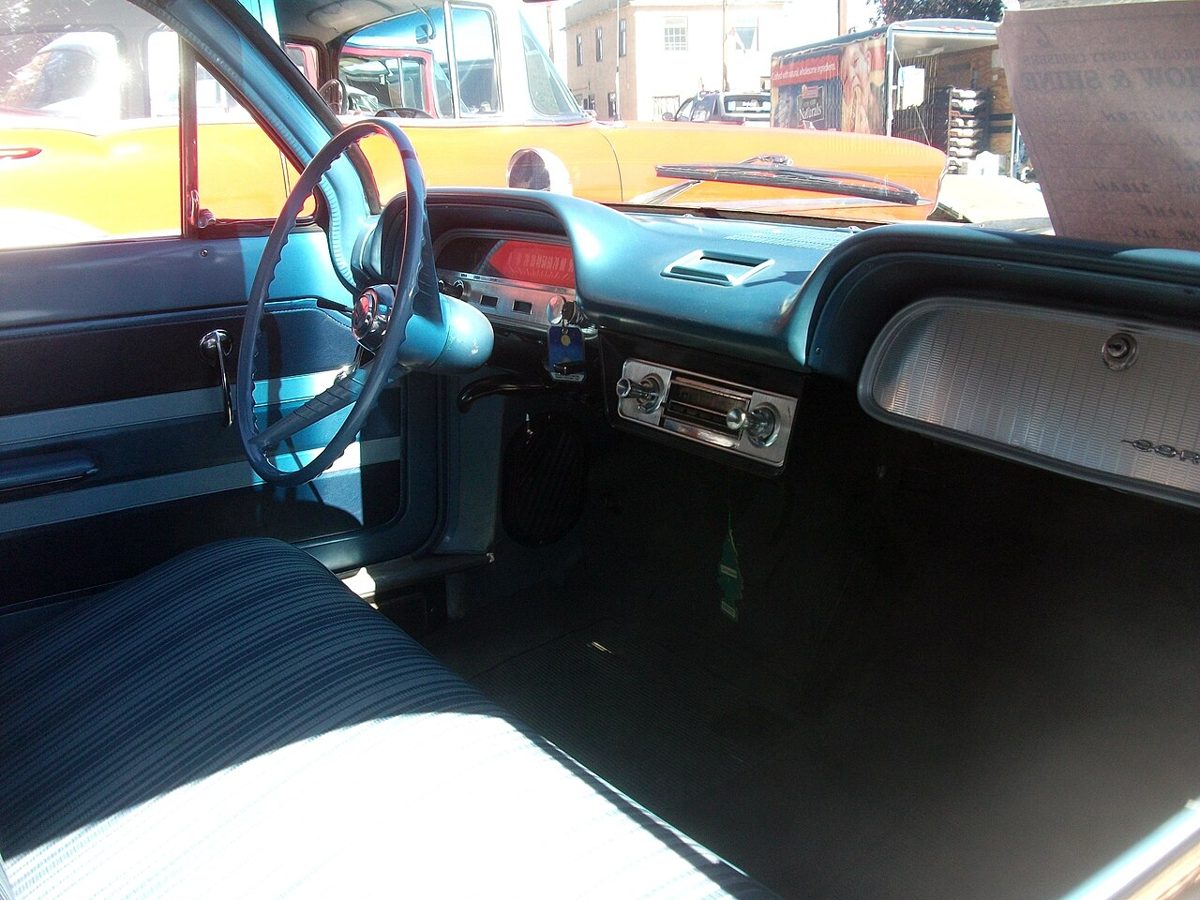
The production of the Corvair came to a quiet end in May 1969. The emergence of the "pony car" segment, led by the Ford Mustang and Chevrolet’s own Camaro, had shifted the market’s focus toward front-engine, V8-powered muscle cars. Additionally, the high production costs of the Corvair's unique parts made it less profitable for GM than the more conventional Nova. However, the end of production was only the beginning of the Corvair’s life as a classic. Today, the air-cooled Chevrolet community is one of the most passionate and dedicated in the automotive world. Organizations like the Corvair Society of America (CORSA) maintain a vast network of knowledge, parts, and support for owners, ensuring that these unique machines continue to grace the roads.
For the air-cooled enthusiast, the Corvair is more than just a car; it's a window into a "what if" moment in American history. What if Detroit had continued to pursue technical innovation and lightweight engineering? What if the air-cooled flat-six had become a staple of the American road? Every time a Corvair owner turns the key and hears that distinctive flat-six chortle, they are keeping that vision alive. From the utilitarian Rampside to the elegant Corsa and the ferocious Yenko Stinger, the air-cooled Chevrolet era was a time of daring risks and brilliant engineering. It remains a testament to the idea that sometimes, the most rewarding path is the one that goes against the grain.
Image credits
- COVER: 1965 Chevrolet Corvair by Eric Friedebach. Licensed under CC BY 2.0. Source: Wikimedia Commons.
- IMG1: 1964 Chevrolet Corvair 164 Turbo engine by Sfosketti. Licensed under CC BY-SA 3.0. Source: Wikimedia Commons.
- IMG2: 1961 Chevrolet Corvair Monza by Elise240SX. Licensed under CC BY-SA 4.0. Source: Wikimedia Commons.
- IMG3: 1962 Chevrolet Corvair Rampside Pick-Up by Greg Gjerdingen. Licensed under CC BY 2.0. Source: Wikimedia Commons.
- IMG4: 1965 Chevrolet Corvair Monza interior by dave_7. Licensed under CC BY 2.0. Source: Wikimedia Commons.
- IMG5: 1966 Chevrolet Corvair Corsa Yenko Stinger by CZmarlin. Licensed under CC BY-SA 4.0. Source: Wikimedia Commons.
- IMG6: 1965 Chevrolet Corvair Corsa by Bull-Doser. Licensed under Public Domain. Source: Wikimedia Commons.
- IMG7: 1961 Chevrolet Corvair sedan interior by dave_7. Licensed under CC BY 2.0. Source: Wikimedia Commons.