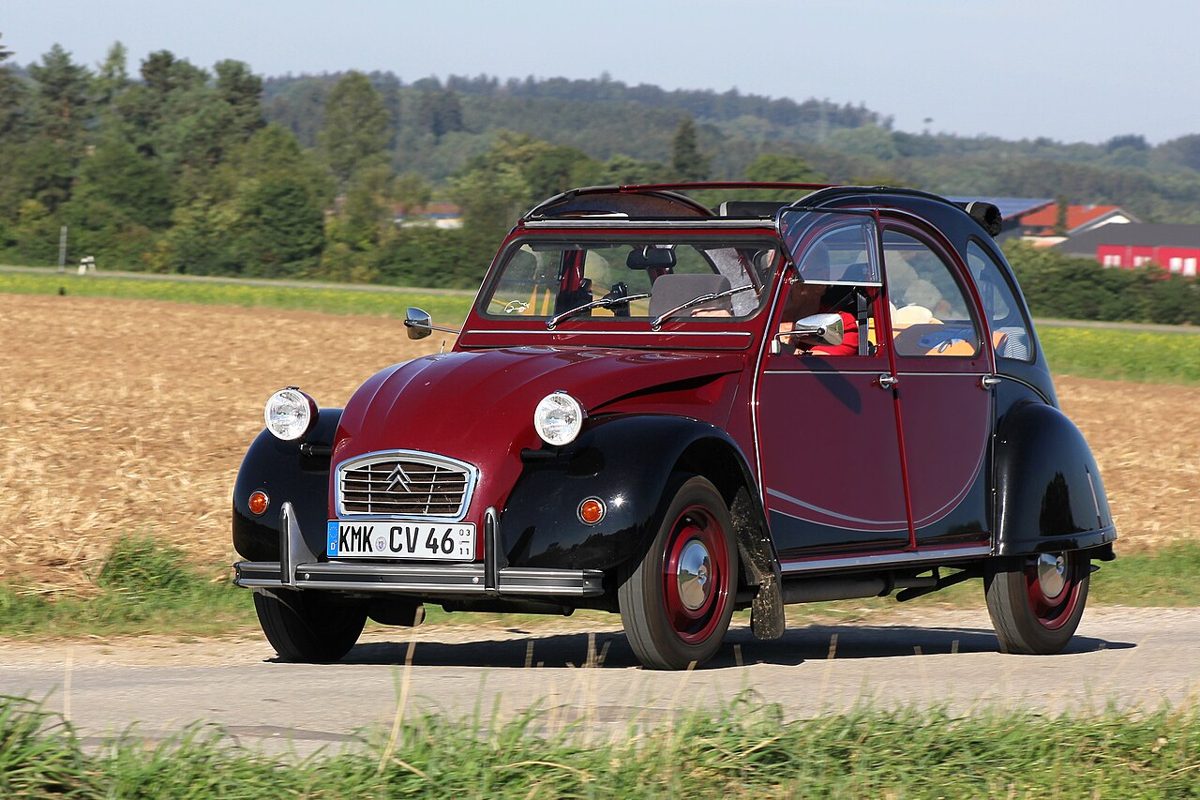
Few automotive brands have dared to be as consistently idiosyncratic as Citroën. Founded by André Citroën in 1919, the company established a reputation for engineering excellence and bold design. From the pioneering Traction Avant to the space-age DS, Citroën’s history is a timeline of technological leaps. Yet, for all their hydraulic complexity and aerodynamic futurism, it was a family of simple, air-cooled engines that truly defined the brand’s mission to motorize the masses. For over four decades, Citroën’s air-cooled flat-twins and flat-fours provided the heartbeat of French life, powering everything from the humblest rural utility to the most sophisticated family sedan.
The TPV Project: Secret Origins and Rural Dreams
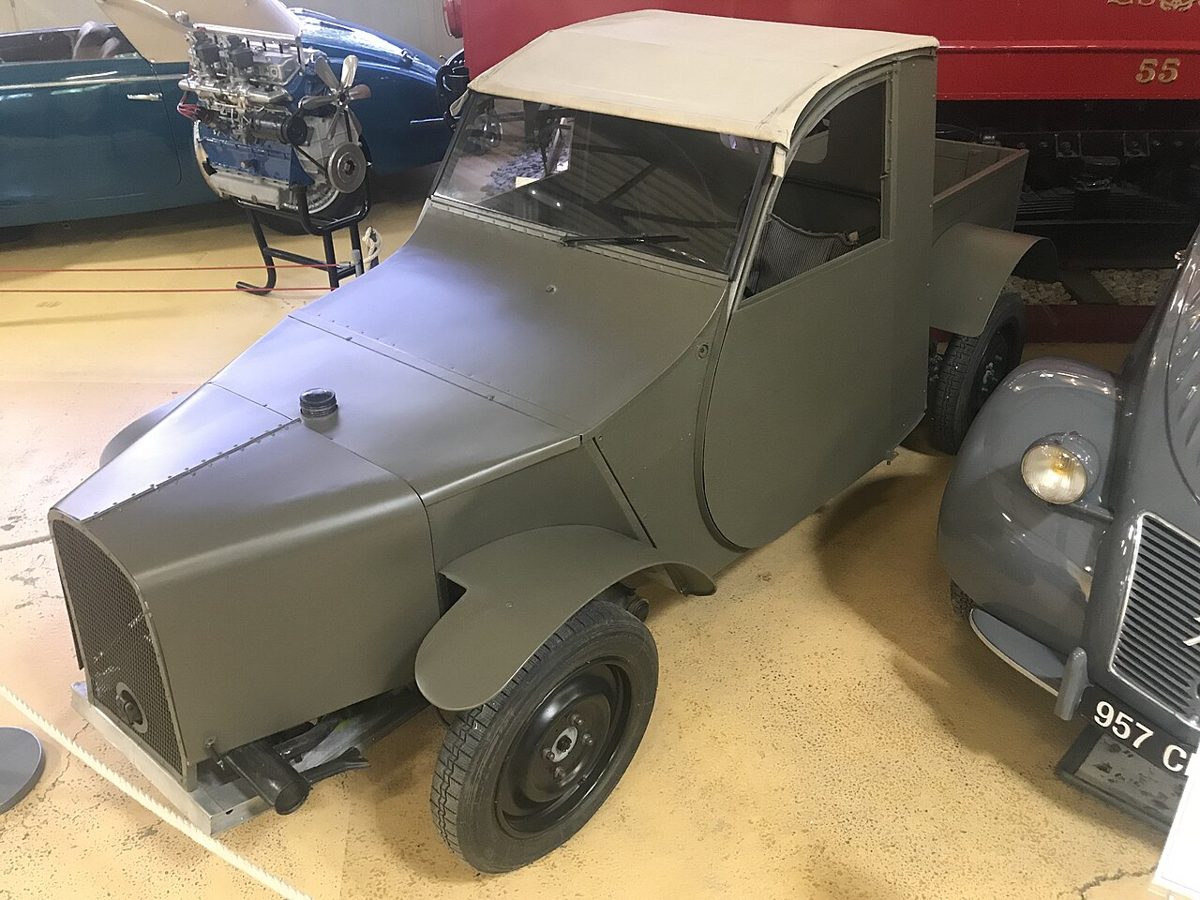 The story of Citroën’s air-cooled era begins in the mid-1930s with a project known as the TPV, or Toute Petite Voiture. Following the company’s takeover by Michelin in 1934, Pierre-Jules Boulanger was tasked with creating a vehicle for the rural French population. The brief was famously simple: a car capable of carrying four people and fifty kilograms of farm produce across a plowed field without breaking an egg. It had to be easy to maintain, fuel-efficient, and affordable. Boulanger’s vision was for a "four wheels under an umbrella" philosophy that stripped away every unnecessary luxury.
Early prototypes of the TPV were radical. To save weight, the design team, led by engineer André Lefèbvre and stylist Flaminio Bertoni, experimented with aluminum bodies and magnesium alloy parts. Interestingly, the first 1936 prototypes utilized water-cooled engines. However, the team soon realized that water-cooling added weight and complexity. The decision was made to switch to an air-cooled flat-twin configuration, a move that would define Citroën’s small-car engineering for fifty years. By 1939, a pre-series of 250 cars was ready for the Paris Motor Show.
World War II intervened before the TPV could launch. Boulanger ordered the prototypes hidden or destroyed to prevent them from falling into Nazi hands. Several were buried or hidden in factory rafters. For years, the project remained a secret, with only a few prototypes surviving. These hidden gems were rediscovered decades later, providing a glimpse into the birth of a legend. The war years allowed engineers to refine the design in secret, moving from the crude TPV to the polished vehicle that would eventually shock the world in 1948.
1948: The 2CV Changes Everything
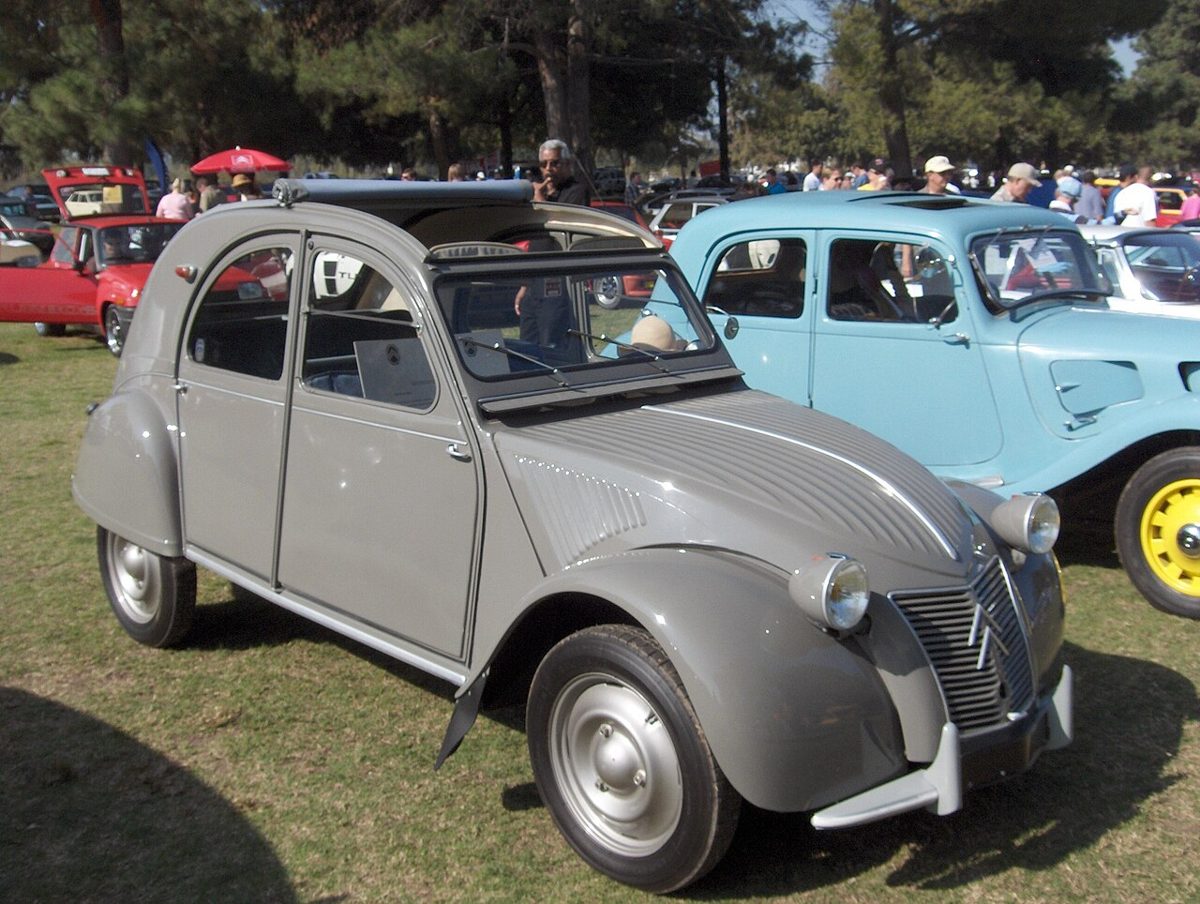 When the Citroën 2CV debuted at the 1948 Paris Motor Show, the press mocked its minimalist look. Journalists dubbed it the "tin snail," but the public saw something else: freedom. The 2CV was powered by a 375cc air-cooled flat-twin engine producing a mere 9 horsepower. It was loud and slow, but virtually indestructible. The engine featured a hemispherical combustion chamber and a clever oil-cooling system that allowed it to run at full throttle for hours without overheating. It was an engineering masterclass in doing more with less.
The 2CV’s chassis was just as revolutionary. It featured a unique interconnected suspension system where the front and rear wheels on each side were linked, providing a soft ride that ironed out the worst French ruts. The body used thin steel panels, with a full-length canvas roof that could be rolled back for oversized cargo. Inside, the seats were simple hammocks that could be removed for a picnic. Despite early criticism, demand was so high that waiting lists soon stretched to five years. Priority was given to doctors and farmers, cementing the car’s status as a vital tool for post-war France.
Throughout the 1950s and 60s, the engine grew in capacity. In 1954, it reached 425cc, bumping output to 12 horsepower. This was followed by 18 horsepower and eventually the 602cc version. The 2CV also spawned variants like the Fourgonnette van and the 2CV Sahara. The Sahara featured two engines—one in the front and one in the rear—providing four-wheel drive for North African dunes. By the time production ended, the 2CV had become a global icon, representing a unique blend of French wit and pragmatic engineering that remains beloved by collectors worldwide.
Ami 6 and 8: The Family Friend
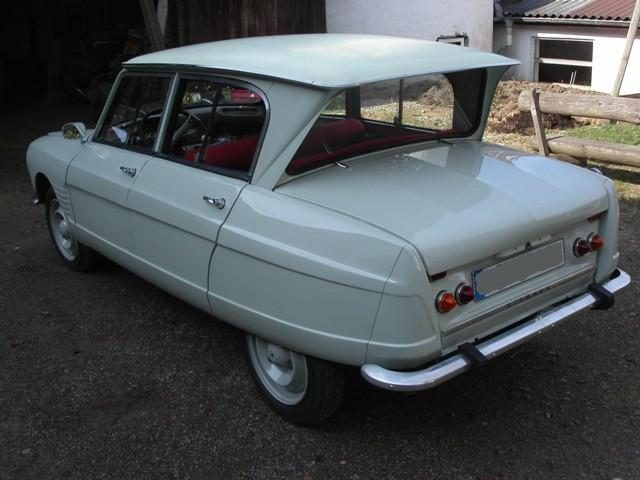 By the early 1960s, Citroën needed a model between the minimalist 2CV and the high-end DS. The result was the Ami (French for "friend"). Launched in 1961, the Ami 6 used the 2CV chassis but featured more substantial bodywork and comfort. Its most striking feature was the reverse-raked "Z-profile" rear window designed by Flaminio Bertoni. This styling allowed for a large trunk and rear headroom while keeping the car compact. It was a polarizing design that spoke to Citroën’s desire to solve practical problems with unconventional aesthetics.
The Ami 6 was powered by a 602cc air-cooled flat-twin, providing 22 to 32 horsepower. While modest, the Ami offered refinement and ride quality unheard of in the economy class. Its interconnected suspension made it exceptionally comfortable on long journeys. The Ami 6 was an enormous success, becoming France’s best-selling car in 1966. It proved that Citroën’s air-cooled platform was versatile enough to move beyond pure utility into family motoring, offering a tactile driving experience that modern cars often lack.
In 1969, the Ami 8 replaced the Ami 6. Styled by Robert Opron, it featured a more conventional fastback rear and a cleaner front. Mechanicals remained similar, though the Ami 8 introduced front disc brakes and suspension refinements. The Ami 8 continued the success, staying in production until 1978. For enthusiasts, the Ami represents a peak of "A-Series" evolution, offering the charm of the air-cooled twin in a package that felt like a "real" car. It bridged the gap for the French middle class, providing a friendly and reliable companion.
Dyane: The Successor That Wasn't
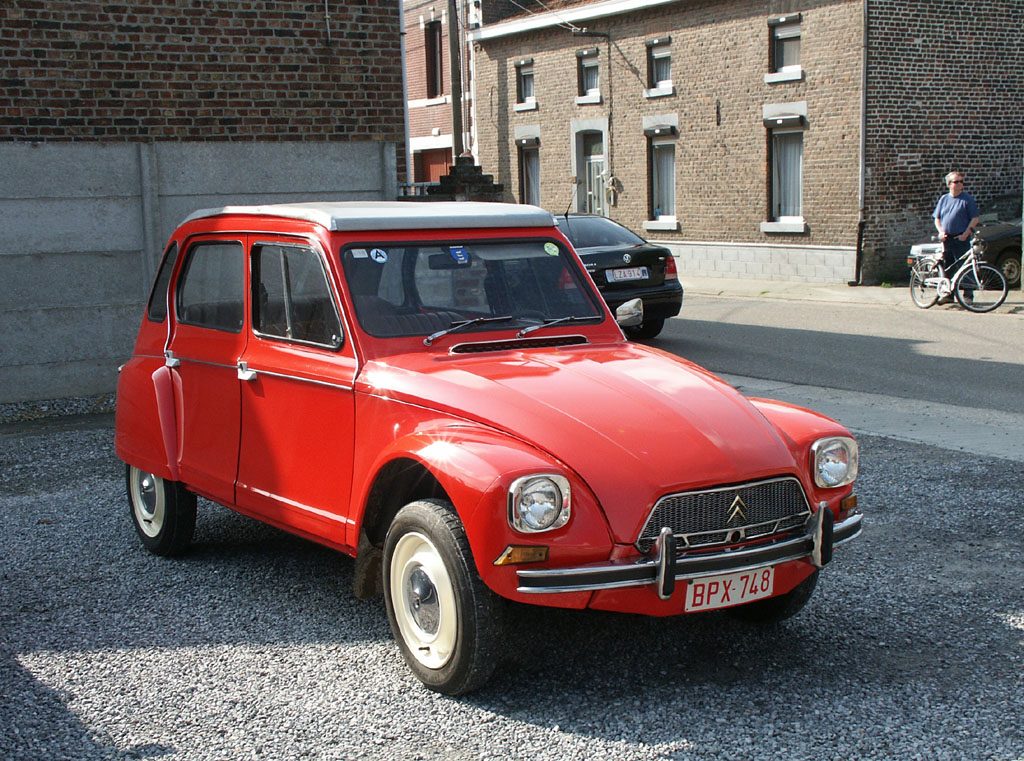 In the mid-1960s, Citroën developed the Dyane to compete with the Renault 4. Launched in 1967, its design was outsourced to Louis Bionier at Panhard. The Dyane featured an angular body with a built-in hatchback—a response to modern trends. It also featured recessed headlights and more sophisticated interior trim, aiming to lure buyers who found the 2CV too agricultural. Despite its modernization, the Dyane never quite captured the public's heart like the original "tin snail."
Mechanically, the Dyane used the same 425cc and 602cc air-cooled engines and interconnected suspension. It was positioned slightly above the 2CV, offering more features and speed. While popular, it never replaced the 2CV; both were produced alongside each other for nearly two decades. The Dyane was retired in 1983, while the 2CV outlived it by seven years. This survival highlighted the purity of the original concept, which the Dyane’s more ornate styling could never quite match.
The Dyane led to the Acadiane commercial variant, which replaced the 2CV-based Fourgonnette. The Acadiane used the Dyane’s front and a larger rear box, becoming a staple for French small businesses. The Dyane and Acadiane represent a fascinating chapter, showing how Citroën attempted to modernize its heritage without losing the essential simplicity. They were cars for a transition era, keeping the air-cooled flame alive in a rapidly modernizing world where hatchback utility was becoming the new standard for the European market.
The Méhari: Plastic Freedom
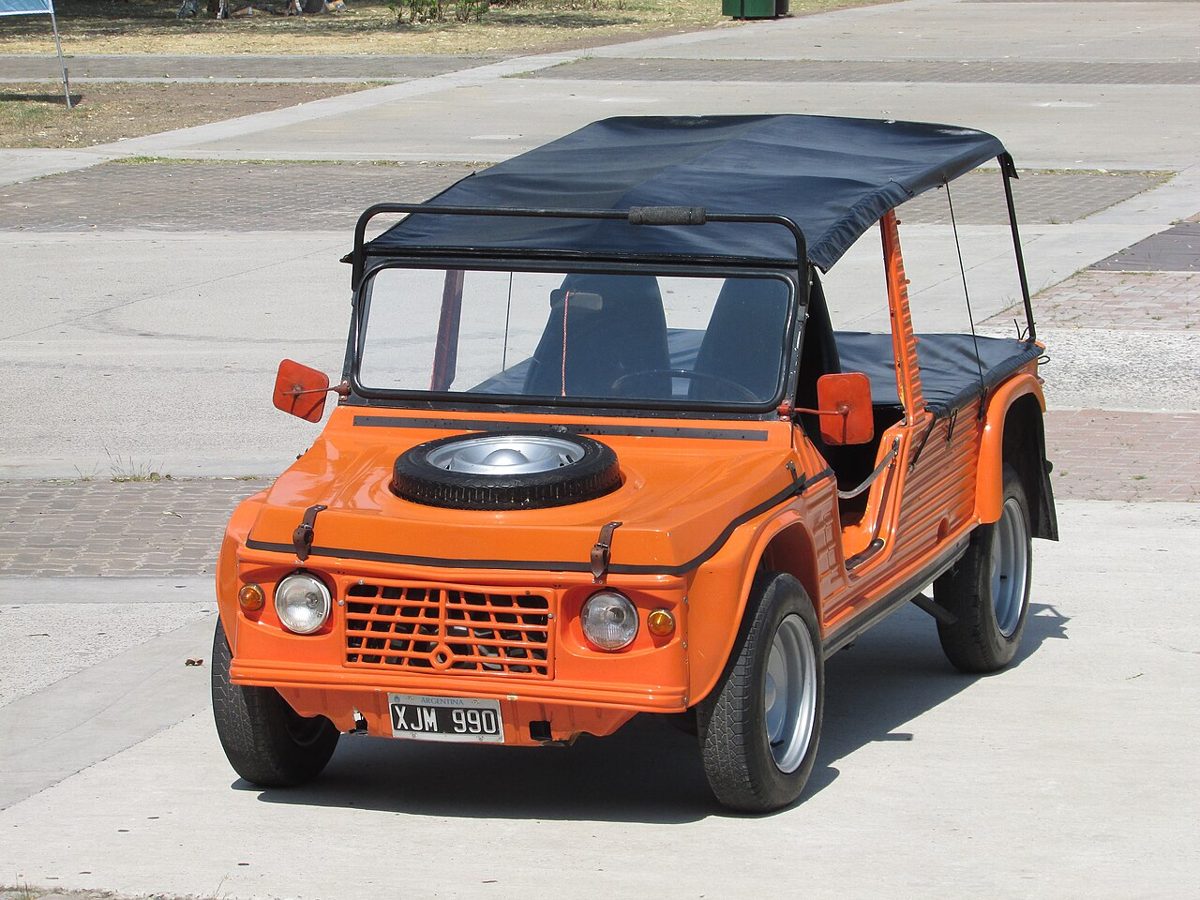 Launched in May 1968, the Méhari was a lightweight utility and recreational vehicle. Its body was made of ABS plastic, which was corrugated for strength and colored throughout. This meant the Méhari could never rust, and minor scratches were invisible. It was named after a fast-running dromedary camel, reflecting its rugged nature. It was a car that didn't just carry you to the beach; it felt like part of the summer itself, a symbol of freedom and youthful rebellion.
Underneath sat the 602cc air-cooled twin from the Dyane 6. With a weight of just over 500 kilograms, it was sprightly and capable off-road. It was a minimalist masterpiece: the doors were often fabric flaps, and the roof was a simple canvas assembly. It was the ultimate "beach car," beloved by vacationers and farmers alike. The French Army even adopted it for lightweight transport. The plastic body was unaffected by salt spray or mud, making it the perfect tool for coastal living and rural exploration across the Mediterranean.
In 1979, the Méhari 4x4 was introduced, featuring four-wheel drive and a low-range gearbox. Only 1,300 were built, making them highly prized today. The Méhari remained in production until 1988, a twenty-year run that proved there was a market for a car that was essentially a functional toy. It remains one of the most cheerful expressions of Citroën’s philosophy, proving that air-cooling and plastic were a perfect match for anyone seeking adventure without the weight of conventional automotive baggage.
The GS and GSA: Air-Cooled Sophistication
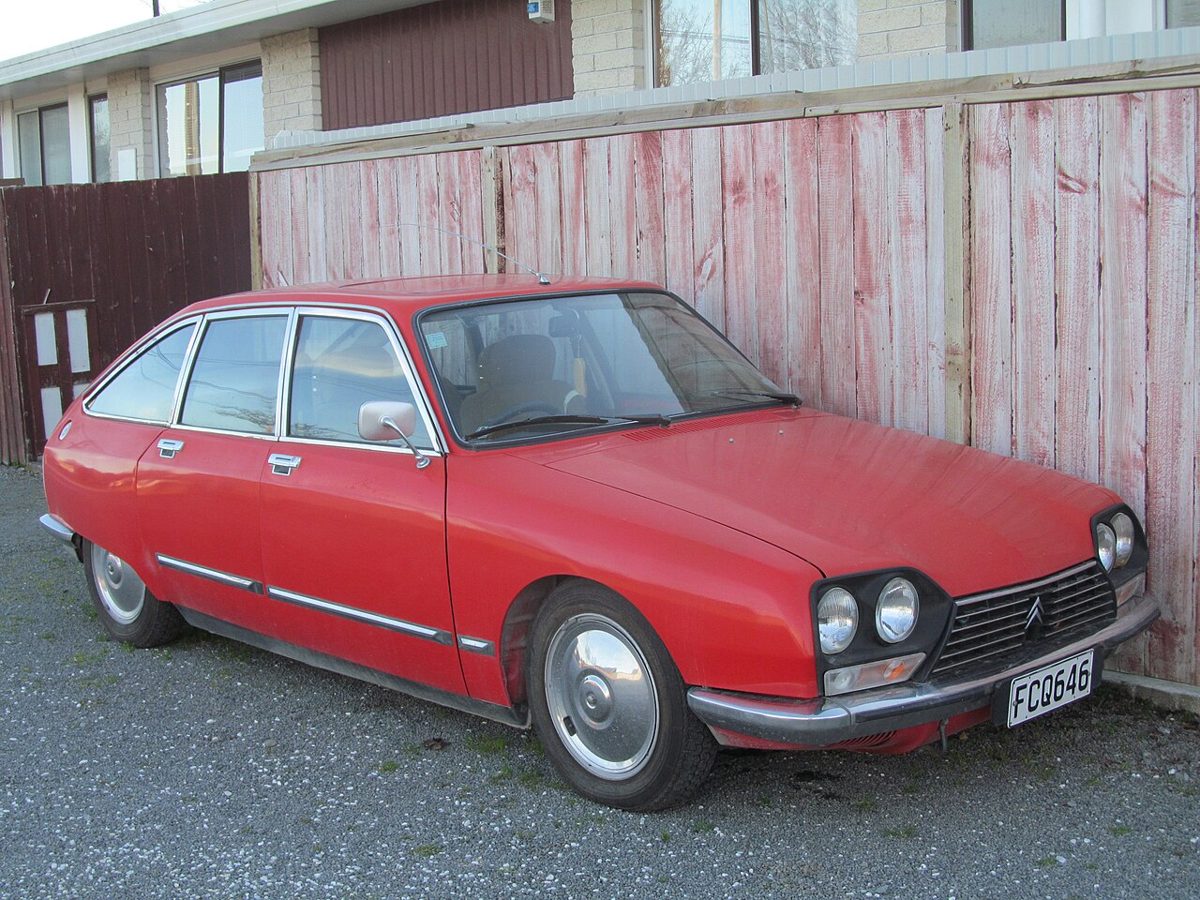 In 1970, Citroën launched the GS to bring air-cooled technology to the middle class. The GS featured a sophisticated air-cooled flat-four "boxer" engine, initially 1,015cc and later growing to 1,300cc. Unlike the pushrod twins, the GS engine featured overhead camshafts driven by rubber belts, revving smoothly to 6,000 RPM. It was a compact and efficient power unit, providing excellent performance and a unique, high-pitched mechanical symphony that defined the driving experience of this high-tech family sedan.
The GS was a technical tour de force, featuring hydropneumatic suspension, powered inboard disc brakes, and an aerodynamic body styled by Robert Opron. It offered ride comfort and stability that shamed luxury cars. Voted European Car of the Year in 1971, the GS utilized air-cooling to keep the front end low, improving aerodynamics and providing a low center of gravity. It felt light on its feet and modern, proving that air-cooling wasn’t just for economy cars but could be part of a sophisticated, high-performance package.
In 1979, the GS evolved into the GSA, introducing a hatchback and futuristic interior satellites. The GSA used the air-cooled flat-four until production ended in 1986. Over 2.5 million GS and GSA models were produced, making it one of Citroën’s most successful models. It proved that air-cooling could offer a unique alternative to the water-cooled establishment. The GS flat-four remains a masterpiece of compact packaging and high-revving character that still delights drivers today with its smoothness and technical purity.
The Experimental Edge: Birotor and Visa
 The 1970s saw intense experimentation, including the GS Birotor in 1973. While the standard GS was air-cooled, the Birotor featured a twin-rotor Wankel engine developed with NSU. Though the Wankel was liquid-cooled, the car shared the GS’s air-cooled DNA and alternative-engine research. The Birotor was smooth but suffered from poor fuel consumption during the oil crisis. Citroën eventually tried to buy back and scrap most of them, making it a legendary footnote in the air-cooled GS story and a rare prize for modern collectors.
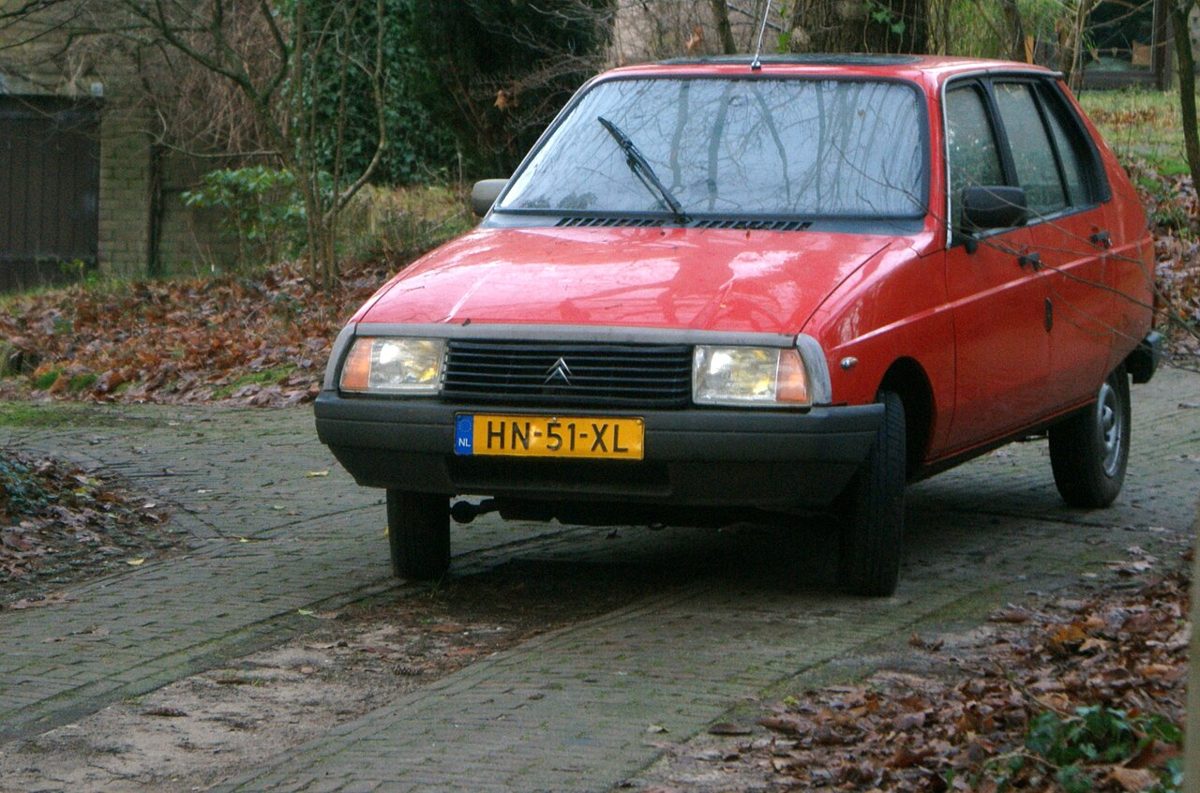
A more successful application appeared in the 1978 Citroën Visa. While many versions used Peugeot water-cooled engines, the entry-level "Bicylindre" models used a modernized version of the 2CV’s flat-twin. Displacing 652cc, this engine featured aluminum cylinders with Nikasil liners and a fully electronic ignition system—a first for a mass-produced car. This "V06" engine was the ultimate evolution of the flat-twin, offering more power and reliability. It showed that even as the industry moved toward water-cooling, Citroën’s air-cooled tech still provided a unique character.
The Visa Bicylindre bridged the old world of the 2CV and the modern 1980s. Its electronic ignition was a direct descendant of technology tested in experimental projects, proving that Citroën’s research yielded practical results. Even as the company joined the PSA Group, the air-cooled Visa remained a distinctly Citroën product. It carried the torch for the flat-twin into the digital age, proving that a two-cylinder pulse could still be relevant in a four-cylinder world, provided it was executed with sufficient ingenuity and forward-thinking engineering.
1990: The Final Curtain in Mangualde
By the late 1980s, emissions regulations were making it difficult for air-cooled engines to keep up. The GS was replaced by the BX, and the Visa by the AX. Yet, the 2CV remained popular as a cultural artifact. Production in France ended in 1988, but the line in Mangualde, Portugal, continued for two more years. The last Citroën 2CV, a two-tone grey Charleston, rolled off the assembly line on July 27, 1990. It marked the end of an era. Over 5.1 million 2CV variants had been produced over 42 years, a testament to the original concept.
When combined with the Ami, Dyane, Méhari, and GS, the total number of air-cooled Citroëns exceeded nine million. These cars had become inseparable from the identity of France, the mechanical lifeblood of the countryside and quirky icons of city streets. Today, the air-cooled Citroën community is vibrant, celebrating these cars for their character and engineering honesty. They remind us of a time when automotive design was driven by vision rather than market research, and when a simple air-cooled engine could be the key to a world of adventure.
The tin snail may have finally stopped, but its trail of innovation remains a permanent mark on automotive history.
Image credits
- Citroën 2CV Charleston (Cover) — Lothar Spurzem, CC BY-SA 2.0 DE
- Citroën TPV Prototype (1936) — HReuter, CC BY-SA 4.0
- 1955 Citroën 2CV — PLawrence99cx, Public domain
- Citroën Ami 6 — AmiSis, CC BY-SA 3.0
- Citroën Dyane 6 — klever, Public domain
- Citroën Méhari Ranger — JasonVogel, CC BY-SA 4.0
- Citroën GS Pallas (1978) — NZ Car Freak, CC BY 2.0
- Citroën Visa II L — GTHO, CC BY 2.0