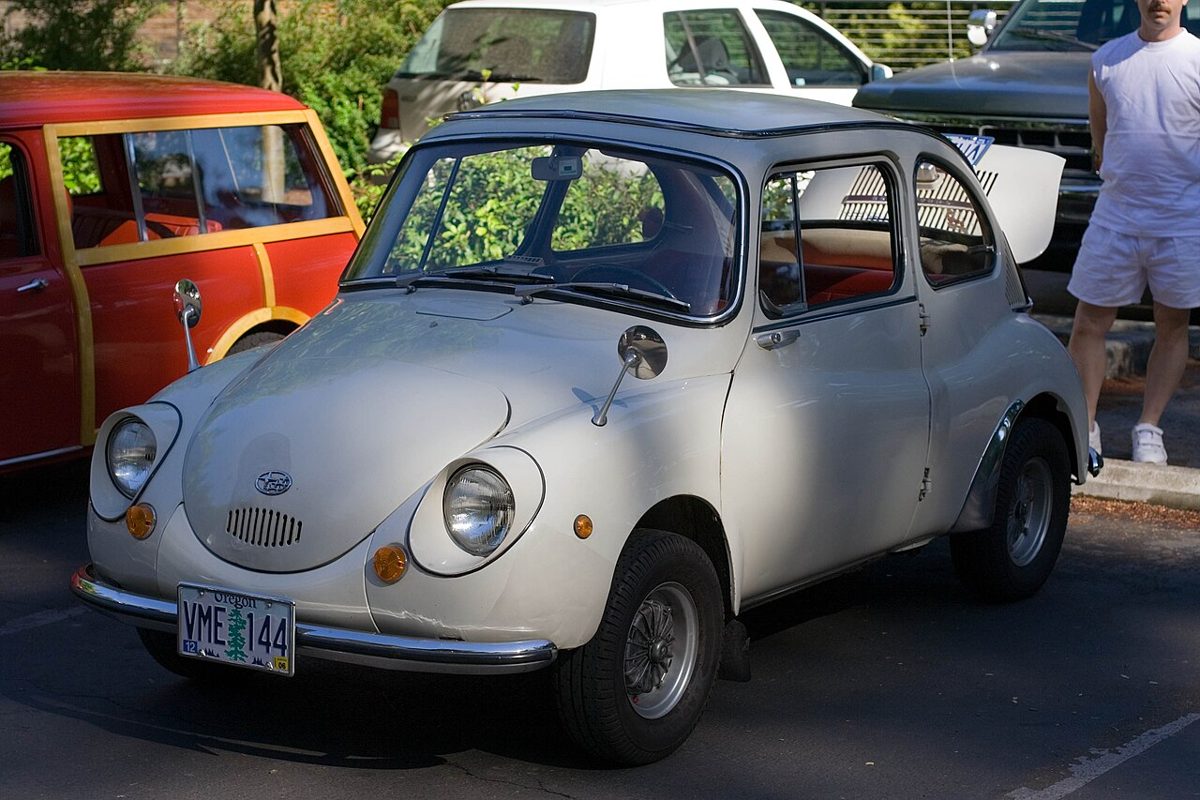
Subaru, the automotive division of Fuji Heavy Industries (now Subaru Corporation), traces its lineage back to the Nakajima Aircraft Company, a heritage that profoundly influenced its engineering philosophy. Born from the remains of a post-war aerospace giant, the brand initially struggled to find its footing in the civilian market, experimenting with scooters and a failed mid-sized car before revolutionizing Japanese motoring. Today, while known for symmetrical all-wheel drive and boxer engines, Subaru’s identity was forged in the fire of air-cooled, two-stroke simplicity. From the iconic 360 to the utilitarian Sambar and the sophisticated R-2, these machines proved that lightweight efficiency and rugged engineering could motorize a nation.
The Birth of the "Ladybug": Post-War Necessity and the K-10
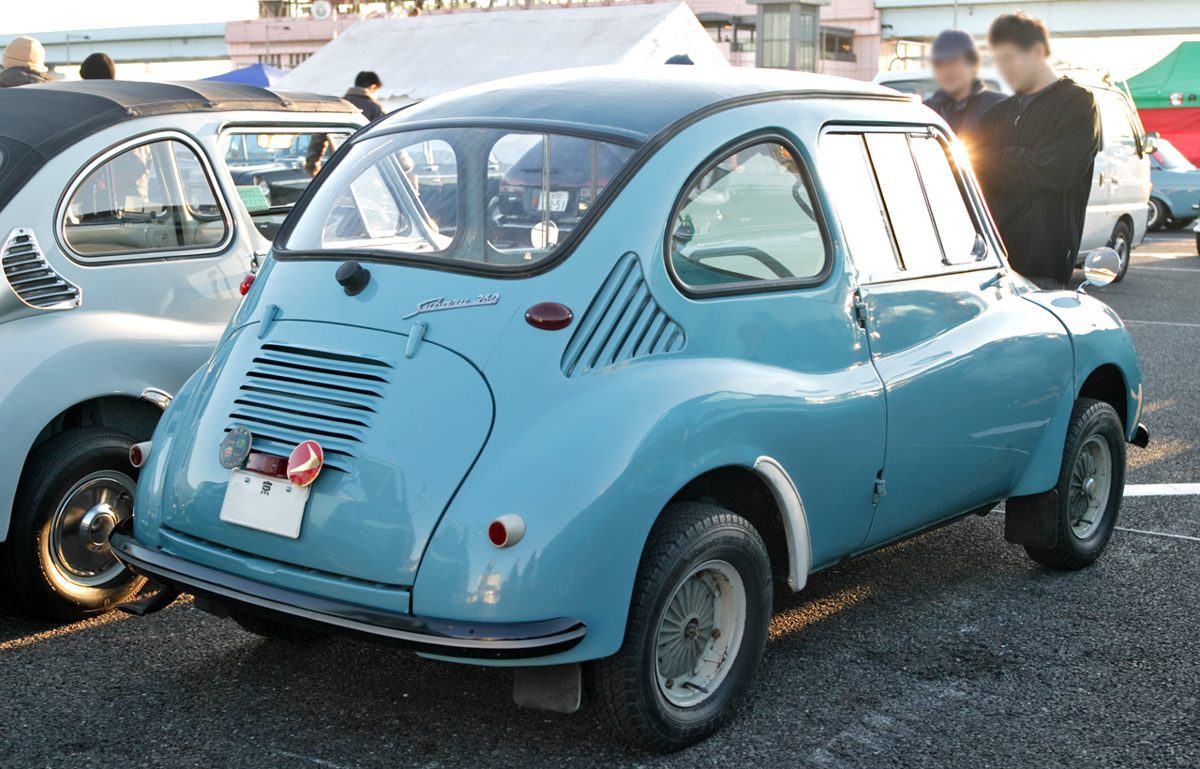 In the late 1950s, Japan was a nation in transition, seeking a way to put its citizens on wheels without the high costs of traditional automobiles. The Ministry of International Trade and Industry (MITI) proposed the "People’s Car" concept, challenging manufacturers to build a four-seater capable of 100 km/h with a price tag under 250,000 yen. Fuji Heavy Industries, led by chief engineer Shinroku Momose, took up the challenge. Momose, a former aircraft designer, applied aerospace principles to the project, resulting in the Subaru 360. Nicknamed the "Ladybug" (Tentomushi) due to its rounded, beetle-like shape, the 360 was a marvel of packaging. Launched in 1958, it utilized a monocoque body and a fiberglass roof—innovations that kept weight down to a mere 848 pounds. It was the first car to truly meet the needs of the Japanese public, providing reliable transportation in a package that was easy to maintain and affordable to run.
The 360 was not just a car; it was a symbol of Japan's economic recovery. Its rear-hinged "suicide" doors made entry and exit easy in tight city streets, while its torsion bar suspension provided a surprisingly comfortable ride over the often-unpaved roads of the era. By the time production ended in 1971, nearly 400,000 units had been produced, cementing its place as the car that motorized Japan. It was the "Volkswagen Beetle" of the East, a machine that transcended its humble specifications to become a cultural icon.
Engineering the EK31: Two Cylinders, Two Strokes, and Air Cooling
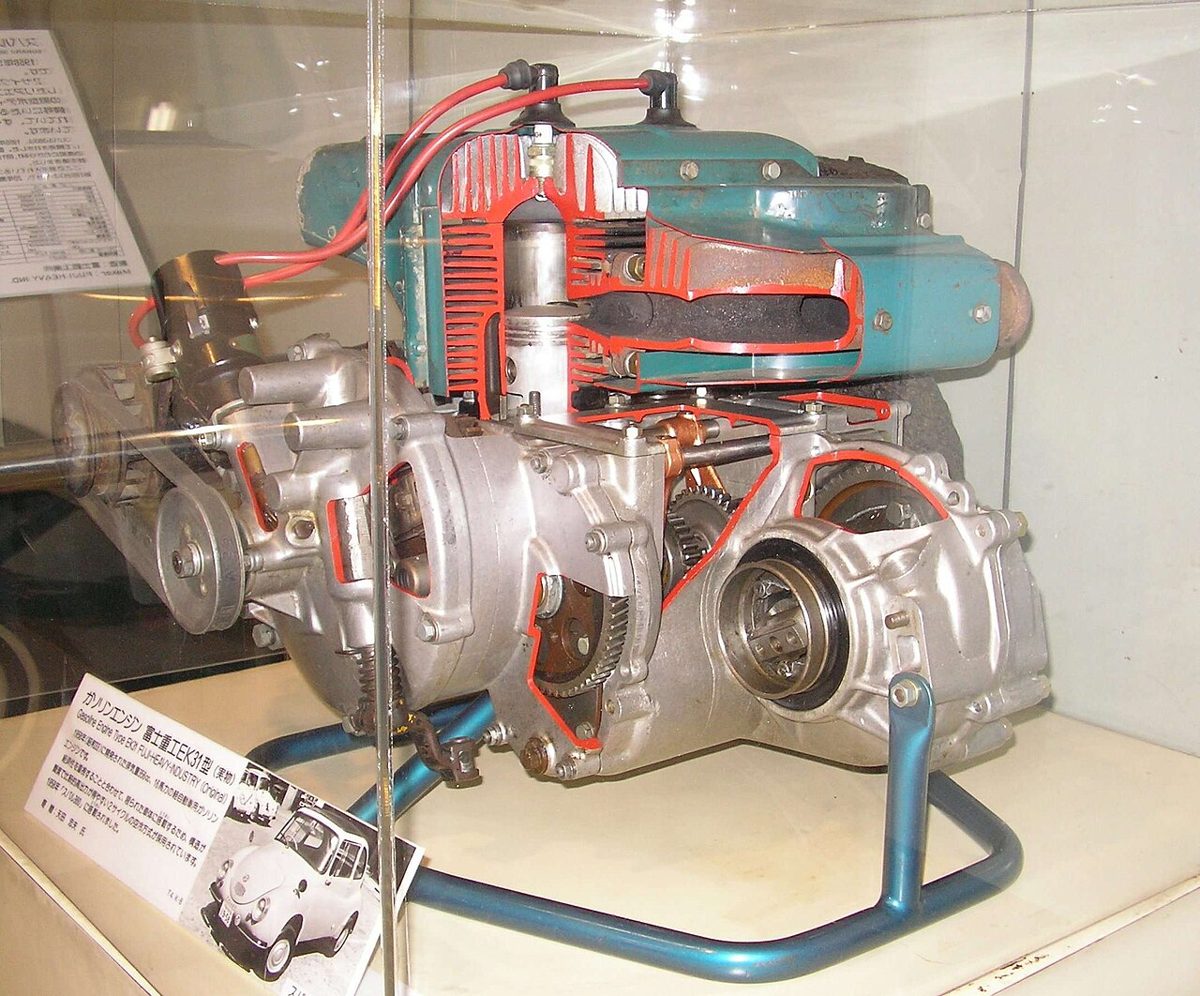 At the heart of the Subaru 360 was the EK31 engine, a masterpiece of air-cooled simplicity. This 356cc, two-cylinder, two-stroke unit was mounted transversely at the rear, a configuration that maximized interior space while simplifying the drivetrain. In its original 1958 iteration, the EK31 produced a modest 16 horsepower. However, what it lacked in outright power, it made up for in character and reliability. The engine was air-cooled via a fan-shroud system, a necessity for a car designed to be lightweight and simple to service. Early models required owners to premix their oil and gasoline, much like a contemporary lawnmower or scooter, but Subaru soon introduced the "Subarumatic" system, an automatic oil injection setup that eliminated the guesswork for the driver.
As the years progressed, the EK engine series evolved. Output climbed to 18, then 20, and finally 25 horsepower in the standard models. The air-cooled design was perfectly suited for the 360's mission; it was light, required no radiator or coolant hoses, and could be easily accessed via the rear engine lid. The distinctive "pop-pop-pop" exhaust note of the two-stroke twin became a familiar sound in Japanese neighborhoods, a reminder of the car's aeronautical roots where power-to-weight ratios were everything. Even at high RPMs, the EK31 remained resilient, a testament to Momose's insistence on high-quality materials and precision manufacturing.
The Sambar: Subaru’s Air-Cooled Workhorse
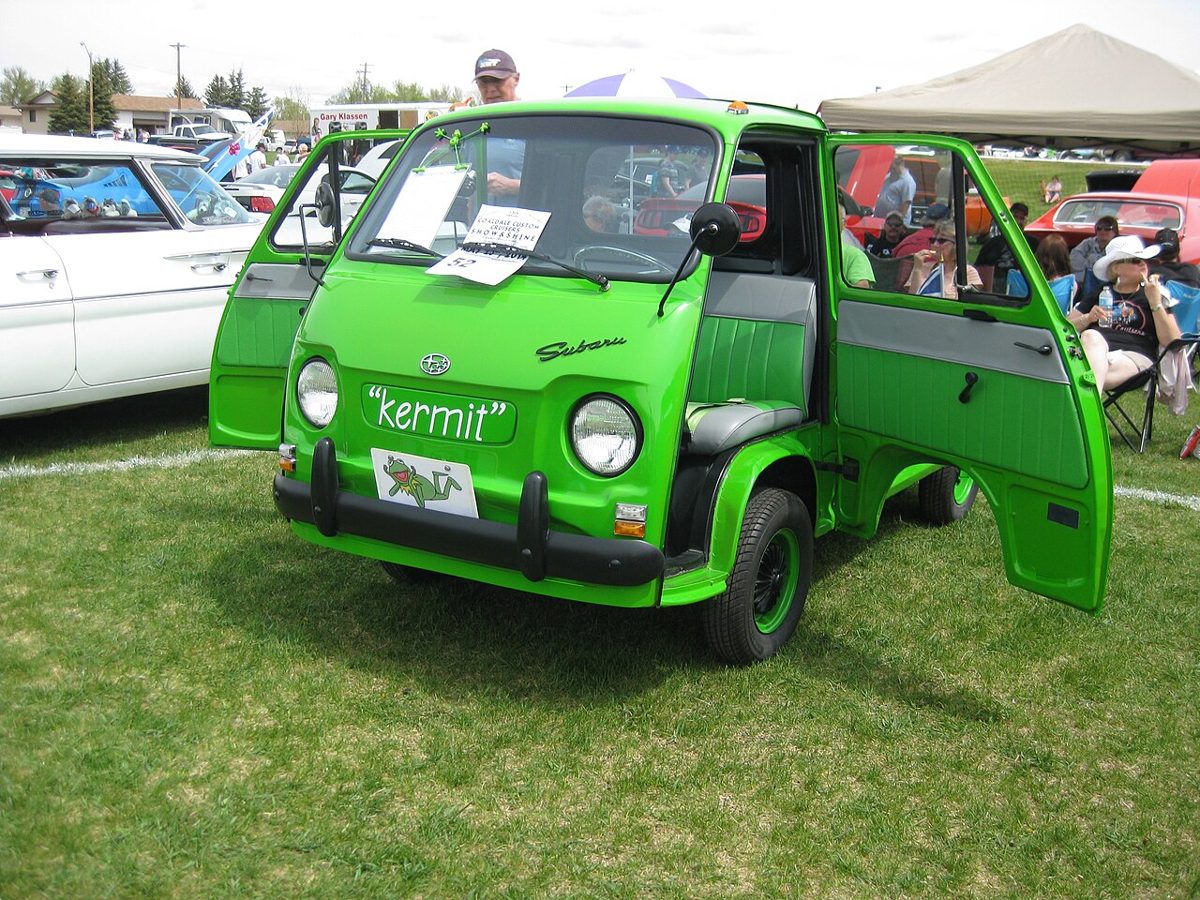 Seeing the success of the 360 sedan, Subaru expanded its air-cooled lineup to include the Sambar, a dedicated commercial vehicle launched in 1961. Utilizing the same EK31 engine and rear-engine layout, the Sambar was Japan's first cabover kei truck. By placing the driver over the front wheels and the engine at the very rear, Subaru created a cargo platform that was incredibly spacious for such a small footprint. The Sambar was available as a pickup truck or a van, and its independent four-wheel suspension gave it a significant advantage over competitors who still relied on rigid axles and leaf springs. It was the perfect tool for small business owners and farmers, capable of navigating narrow paths with a full load of produce or goods.
The Sambar's air-cooled engine was a boon for commercial users. With no liquid cooling system to fail, the truck could work all day in the heat of a Japanese summer without overheating. The rear-engine placement also provided excellent traction, even when the bed was empty—a critical feature for a rear-wheel-drive vehicle. The Sambar proved so successful that it started a lineage that continues to this day, though modern versions have long since transitioned to water-cooled, four-cylinder engines. For the air-cooled enthusiast, the first-generation Sambar remains a pure expression of utility and engineering efficiency.
Malcolm Bricklin and the American Gambit
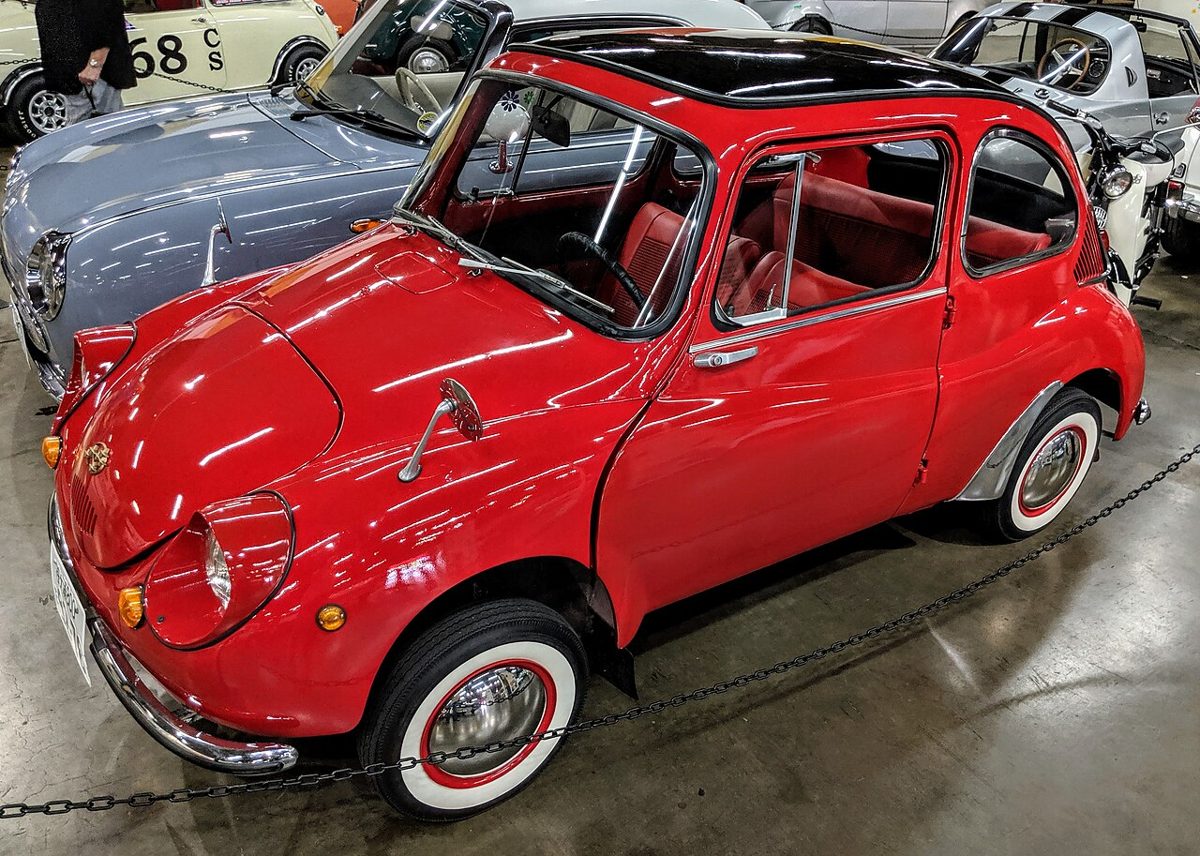 In 1968, a young American entrepreneur named Malcolm Bricklin saw the potential of the Subaru 360 for the United States market. Bricklin, who would later go on to create the Bricklin SV-1 and import the Yugo, founded Subaru of America alongside Harvey Lamm. The plan was audacious: import a tiny, underpowered Japanese microcar into the land of V8 muscle cars and sprawling highways. Because the Subaru 360 weighed less than 1,000 pounds, it was exempt from many of the federal safety standards that governed larger cars. Bricklin marketed the car with the self-deprecating slogan "Cheap and Ugly," hoping to appeal to budget-conscious buyers who were looking for a high-mileage alternative to domestic iron.
Initially, there was a flurry of interest. The 360 offered an incredible 66 miles per gallon at a time when fuel economy was rarely a consideration for American drivers. However, the American road environment was vastly different from that of urban Japan. On high-speed interstates, the 360 was out of its depth. Its 25-horsepower engine struggled to keep pace with traffic, and its small stature made it feel precarious when surrounded by full-sized sedans and heavy trucks. Bricklin's gamble was a bold attempt to disrupt the automotive status quo, but it was about to hit a major roadblock that would nearly sink the brand before it could take root.
"Not Acceptable": The 1969 Consumer Reports Scandal
The turning point for the Subaru 360 in America came in 1969 when Consumer Reports published a review that would become legendary in the automotive industry. The magazine gave the 360 a rating of "Not Acceptable," citing severe safety concerns. During their testing, they found that the car offered virtually no protection in a collision, famously stating that the 360 was "the most dangerous car on the American road." They highlighted that the front bumper was merely a decorative strip of chrome and that the steering column could be pushed back into the driver's chest in a minor impact. Furthermore, they noted that the "suicide" doors were prone to opening at speed if the latch was not perfectly engaged.
The fallout was immediate. Sales cratered as the public became wary of the tiny Japanese car. Dealers were left with thousands of unsold units, and Subaru of America faced a financial crisis. Bricklin tried to save the inventory by creating "Subaru FasTrack" go-kart tracks where customers could race the 360s for a fee, but the damage was done. While the 360 was a brilliant solution for the streets of Tokyo, it was fundamentally incompatible with the American consumer's expectations for safety and power. This failure, however, forced Subaru to rethink its global strategy, eventually leading to the development of larger, more robust models that would eventually win over the American public.
The High-Performance 360: Young SS and Custom Trim
Despite its reputation as a basic commuter, the Subaru 360 had a sporting side that few in the West ever witnessed. In 1968, Subaru introduced the "Young SS," a high-performance version of the 360 designed to appeal to Japan's youth culture. The Young SS featured a twin-carbureted version of the EK32 engine, pushing output to a remarkable 36 horsepower—over 100 horsepower per liter. It also came with a four-speed manual transmission, a tachometer, and a signature black-striped hood. This "pocket rocket" was a precursor to the modern hot hatch, demonstrating that even a microcar could be fun to drive when given enough tuning and a lightweight chassis.
Subaru also offered more luxurious versions of the 360, such as the Custom sedan and the convertible. These models featured upgraded interiors, better sound insulation, and more chrome trim, proving that the 360 platform was versatile enough to cover a wide range of price points. The Custom models often featured the "Subarumatic" oil injection as standard, making them more palatable to buyers who didn't want the hassle of premixing fuel. These variants kept the 360 competitive in Japan even as newer, more modern competitors began to enter the market in the late 1960s.
The R-2: Modernizing the Air-Cooled Formula
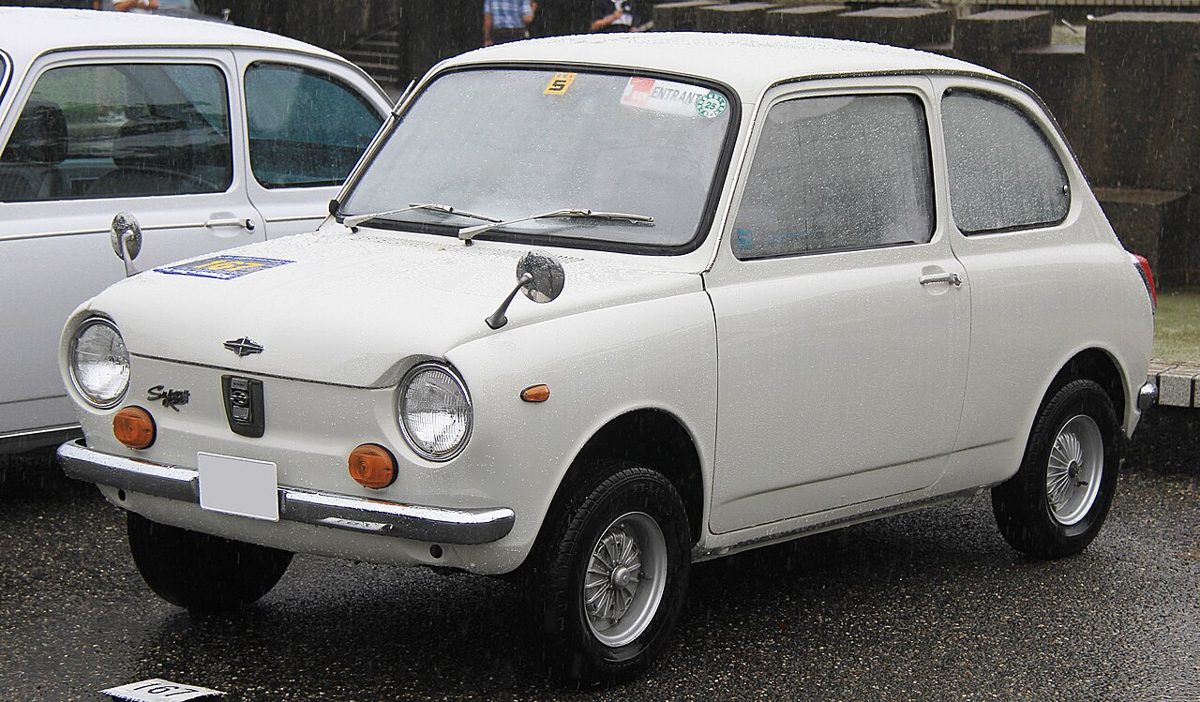 As the 360 reached the end of its life, Subaru introduced its successor: the R-2. Launched in 1969, the R-2 was a significant leap forward in styling and engineering. While it retained the rear-engine, air-cooled layout, it featured a much more modern "wedge" shape and a more spacious interior. The engine was upgraded to the EK33, a 356cc unit that produced 30 horsepower in its standard form. The R-2 was designed to be more stable at speed, with a longer wheelbase and revised suspension geometry that addressed some of the 360's handling quirks. It was a more sophisticated machine, reflecting the growing wealth and sophistication of the Japanese car buyer.
The R-2 was a success in Japan, selling over 25,000 units in its first month. It offered a level of refinement that was unheard of in the kei car class at the time, with better noise vibration and harshness (NVH) characteristics and a more ergonomic dashboard. However, the air-cooled era was drawing to a close. Stricter emissions regulations were on the horizon, and the inherent limitations of the two-stroke, air-cooled design were becoming difficult to overcome. Subaru eventually introduced a water-cooled version of the R-2 in 1971, featuring a faux front grille to house the radiator—a clear sign that the winds of change were blowing.
The Transition: Water-Cooling and the Flat-Four Future
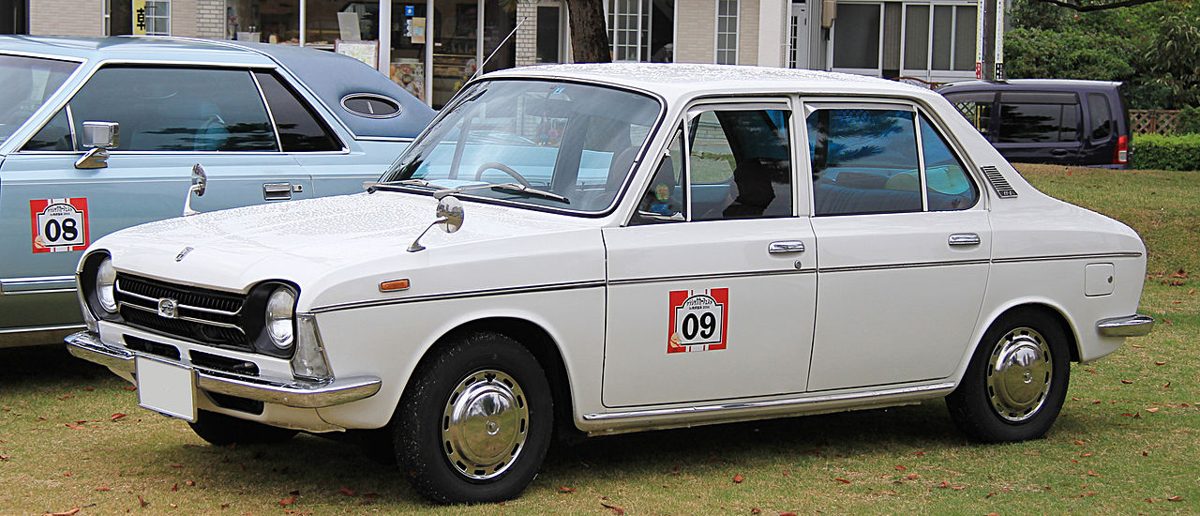 The final transition away from air-cooled engines was solidified with the introduction of the Subaru 1000 and its successor, the Leone. These cars moved the engine to the front and introduced the water-cooled, flat-four (boxer) engine that would become Subaru's trademark. The Subaru 1000, launched in 1966, was a radical departure; it was front-wheel drive and featured inboard brakes and a sophisticated cooling system. This shift was driven by the need for more power, better emissions control, and more stable handling characteristics. By the early 1970s, the air-cooled EK engines were phased out in favor of the water-cooled EA engine family.
The transition was not just technical; it was a shift in Subaru’s global identity. No longer just a builder of quirky microcars, Subaru was becoming a manufacturer of capable, all-weather vehicles. The lessons learned from the air-cooled era—lightweight construction, efficient packaging, and a willingness to be different—remained at the core of the company's DNA. The air-cooled models had served their purpose, motorizing a nation and establishing a brand, but the future required a new kind of engineering that could meet the demands of a global market.
Legacy of the Air-Cooled Subaru
Today, the air-cooled Subarus of the 1950s and 60s are highly sought-after collectibles, cherished for their unique character and historical importance. The Subaru 360, in particular, is honored in the Japan Automotive Hall of Fame and remains a frequent sight at vintage car shows across the globe. These cars remind us of a time when automotive design was driven by necessity and ingenuity rather than focus groups and shared platforms. They were machines with soul, born from the dreams of aircraft engineers who wanted to give people the freedom of the road. From the first pop of the EK31 engine to the final R-2 off the line, Subaru’s air-cooled era was a masterclass in doing more with less.
It was a journey from the Ladybug's humble beginnings to the sophisticated boxers of today, a testament to the enduring power of simple, honest engineering.
Image credits
- Subaru 360 front view — ocean yamaha, CC BY 2.0
- Subaru 360 early model side view — Tennen-Gas, CC BY-SA 3.0
- Subaru EK31 air-cooled engine — NEXT-EXIT, CC BY-SA 3.0
- Subaru 360 pickup (Sambar family) — dave_7, CC BY 2.0
- 1970 Subaru 360 US version — Cullen328, CC BY-SA 3.0
- Subaru R-2 — TTTNIS, CC0
- Subaru FF-1 Star transition model — TTTNIS, CC0